Loading…
NovelBrief · Novels
Coiling Dragon Review: Linley’s Classic Still Holds Up
Coiling Dragon review: I Eat Tomatoes’ completed 806-chapter classic blends magic, cultivation, clan restoration, and a 4.6/5 WebNovel reader score.
11 min readBy Daniel P. Cross
Review at a glance
I Eat Tomatoes · WebNovel
8.7
out of 10
- Chapters
- 806
- Status
- Completed
- Read on
- WebNovel.com, Wuxiaworld.com
Pros
- A clean clan-restoration hook gives Linley's power growth a personal reason
- The Yulan Continent combines spellcasting, magical beasts, and cultivation without requiring a single genre lane
- The completed 806-chapter catalog gives the escalation a readable destination
Cons
- The later scale can make early human conflicts feel small and repetitive
- Long progression stretches sometimes substitute new ranks for fresh dramatic questions
- Platform and translation history can confuse readers choosing where to read
Verdict
A foundational magic-cultivation serial whose clan story and completed shape still reward patient readers, even when its escalation becomes familiar.
This Coiling Dragon review treats the famous classic as a finished object. WebNovel lists I Eat Tomatoes’s novel as completed at 806 chapters, with 24.5 million views and a 4.6 score from 589 ratings. The stable endpoint makes it possible to ask what still works after the genre has borrowed many of its moves.
TL;DR: This Coiling Dragon review finds a durable magic-cultivation hybrid built around Linley Baruch’s fallen Dragonblood Warrior clan. The completed 806-chapter run has a strong personal engine, memorable escalation, and a clear ending, but later power growth can feel more familiar than the opening promise.
Key Takeaways
- WebNovel lists Coiling Dragon by I Eat Tomatoes as a completed Fantasy novel with 806 chapters and a 4.6 rating from 589 ratings.
- The official synopsis follows Linley Baruch from Wushan and the declining Baruch clan into the wider Yulan Continent.
- The story combines spells, swords, magical beasts, academy fantasy, and cultivation-style advancement.
- Its best structural choice is making power a way to reclaim family history rather than a purely abstract number chase.
- Its main weakness is scale: once the ceiling keeps moving, some conflicts become demonstrations of the next rank.
Coiling Dragon Review: The Premise Still Has Teeth
The strongest part of this Coiling Dragon review is not the word “classic.” It is the premise’s economy. Linley is born into the Baruch clan, once famous for its Dragonblood Warriors, but the family has fallen so far that its heirlooms have been sold. The official synopsis gives him a task that is easy to understand before any realm chart appears: reclaim the clan’s lost glory.
That goal gives early training and discovery a human shape. A spell, sword technique, or magical beast encounter is not only a chance to make Linley stronger. It can restore a name, expose a buried part of the family, or prove that the clan’s reputation was not simply nostalgia. The reader has a reason to remember the Baruch name while the setting keeps widening.
The opening also knows how to give a long novel a physical home. Wushan is a small town. The chapter catalog moves through the Dragonblood Warrior Clan, the Coiling Dragon Ring, magical beasts, and the Ernst Institute. These are concrete anchors before the story asks the reader to care about distant powers and cosmic history. A newer serial may begin with a larger map; Coiling Dragon earns its scale by letting Linley grow out of a place. That grounding is a central reason this Coiling Dragon review is more positive about the opening than the later rank ladder.
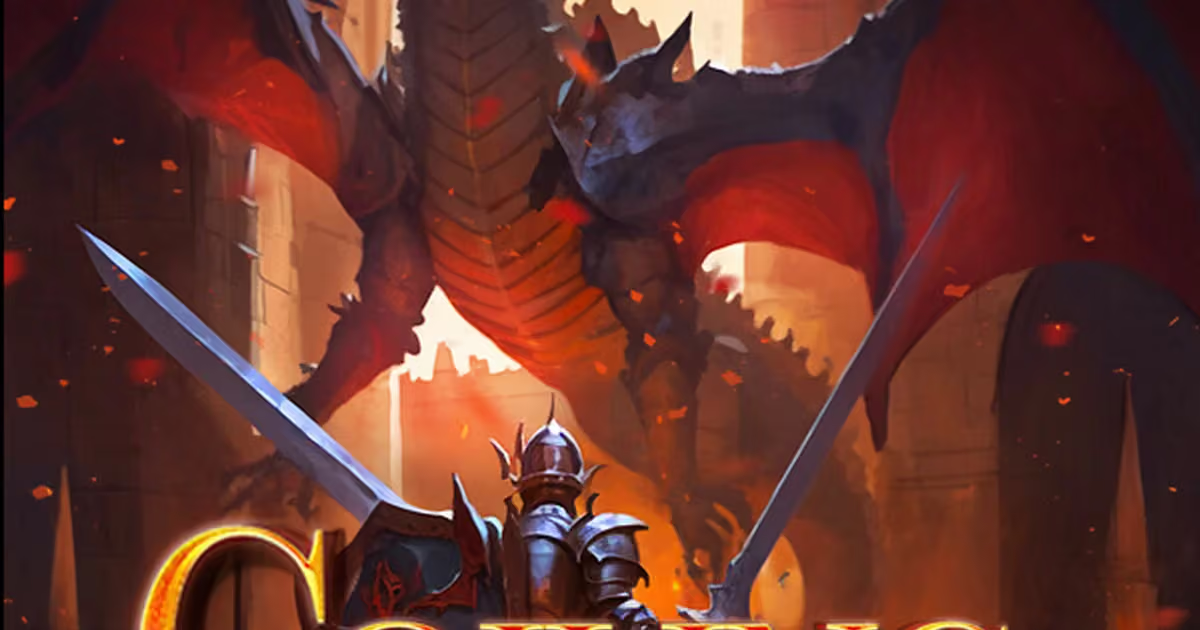
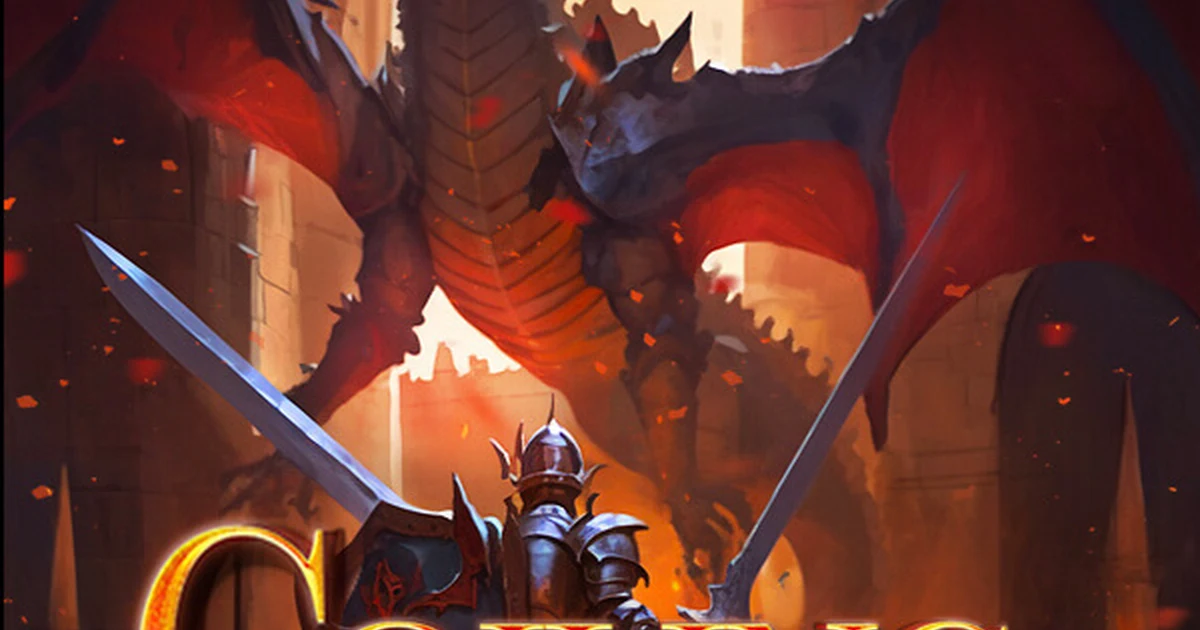 The real WebNovel cover downloaded from the official catalog is used here.
Coiling Dragon Review: Magic and Cultivation Share the Road
The unusual pleasure of this Coiling Dragon review is the way the novel refuses to stay in one genre lane. WebNovel tags it with action, romance, adventure, weak-to-strong, cultivation, and academy. The synopsis, however, foregrounds saints, spells, swords, magical beasts, and the Yulan Continent. The result feels less like a standard sect novel than a Western-fantasy world that gradually reveals a cultivation-shaped ceiling.
That hybrid works because the systems answer different reader questions. Magic gives the early story schools, elements, training, and visible techniques. Martial development gives bodies, bloodlines, and the promise that Linley can become something more than a talented spellcaster. The Dragonblood Warrior inheritance connects those tracks to family history, so the power system is not just an interface bolted onto the plot.
The blend also explains why calling Coiling Dragon simply “wuxia” is imprecise. Wuxia usually centers martial heroes and human-scale jianghu codes; this novel includes magical beasts, immortal beings, and forces that move far beyond ordinary kingdoms. Wuxia vs. xianxia lays out that boundary, while what xianxia means gives new readers the cultivation vocabulary that the later sections assume. That hybrid is the main genre argument in this Coiling Dragon review.
Read What Is Xuanhuan? alongside this Coiling Dragon review if “Chinese fantasy” feels too broad. The label helps explain why a novel can borrow cultivation escalation without using a traditional sect setting.
Linley’s Character Arc and the Cost of Inheritance
Linley is not compelling merely because he becomes powerful. His better scenes connect talent to inheritance. He begins as the heir of a damaged clan, and every discovery about Dragonblood Warriors changes both his options and his obligations. That lets the novel put family memory beside ambition: restoring the Baruch name can be noble, burdensome, or dangerous depending on what the past demands.
The story’s emotional advantage is that Linley’s relationships can make the large world legible. Powerful friends and deadly enemies are not only labels from the official synopsis. They create tests for the idea that strength is a private possession. If Linley’s growth changes whom he can protect, trust, or disappoint, the power ladder retains a social cost.
The limitation is familiar in long progression fiction. A protagonist who is defined by restoration can eventually outgrow the original wound. Once Linley is far removed from Wushan, the clan’s decline risks becoming a prologue to larger spectacles. The novel is strongest when the old name still shapes a choice; it is less sharp when another rank appears only to make the next rank necessary.
That pattern explains the mixed modern reaction. WebNovel’s 4.6 rating shows sustained reader approval, and community comments call the book a gateway into translated Chinese fiction. Other comments focus on the old move from Wuxiaworld to Qidian and on the story’s familiar escalation. Both conversations are useful, but they answer different questions: one is about reading history and access, the other about the novel’s craft.
Worldbuilding: From Wushan to the Yulan Continent
The Coiling Dragon review has to give the setting credit for making movement feel like progress. The chapter catalog names the Mountain Range of Magical Beasts, Fenlai City, the Ernst Institute, the Yulan River, and later conflicts that expand the map. Each place changes what counts as danger. A small-town heir, an academy student, and a high-level cultivator do not inhabit the same story even when they share a protagonist. The geography keeps the Coiling Dragon review from becoming only a list of ranks.
The magical beasts are especially useful early because they show the world’s power before the text explains every upper tier. A forest encounter can make the setting feel dangerous without a lecture on cosmology. The same is true of the Coiling Dragon Ring: it is a concrete object whose meaning grows as Linley’s world widens. Good fantasy objects create questions faster than they provide answers, and the novel understands that rhythm.
Later, the world’s breadth becomes a tradeoff. New planes, experts, and divine-scale conflicts keep the ceiling moving, but they can also flatten local texture. The reader may remember the promise of Wushan and the Baruch clan more vividly than a later battlefield whose main job is to establish another level of power. The completed format helps here: you can judge the full arc rather than waiting for a weekly serial to reveal whether expansion will pay off.
Coiling Dragon Review: Translation and Platform Context
The factual platform story needs careful wording. WebNovel currently hosts an 806-chapter completed catalog and credits I Eat Tomatoes. Its reader reviews repeatedly mention an earlier Wuxiaworld translation and anger about the material appearing on Qidian. Those comments are evidence of community memory, not an official rights ruling, so this Coiling Dragon review does not call the dispute theft or claim a particular contract history. That distinction keeps the Coiling Dragon review about the novel rather than an unresolved platform argument.
The Wuxiaworld author afterword is firmer about the ending. I Eat Tomatoes writes that Coiling Dragon is over, says it runs beyond three million characters, and describes it with Stellar Transformations as the “Grandmist Duology.” That direct author-source note is useful because it separates completion from platform arguments. The catalog is complete; the translation history is a different question.
For a reader choosing an edition, check the site’s current chapter list, payment terms, and attribution. Is Webnovel app safe? covers ordinary account and access checks. Do not assume that a cached Wuxiaworld link, a repost, and the official WebNovel page have identical chapter splits or support the same rights holders.
If the "web novel" label itself is unfamiliar, Web Novel vs. Light Novel → explains the packaging and publishing-route differences before you commit to an 806-chapter catalog.
What Works Best
The Good
- The fallen-clan premise gives Linley’s early advancement a clear emotional direction.
- Wushan, the Baruch clan, the academy, and the magical-beast regions make the scale change visible.
- Magic and cultivation reinforce one another without requiring the story to become a standard sect chronicle.
- The completed catalog lets readers evaluate the full escalation and ending rather than an unfinished promise.
- The Coiling Dragon Ring and Dragonblood Warrior inheritance give the power system memorable anchors.
The Cons
- The later ceiling can make earlier conflicts feel like small rehearsals for the next rank.
- Familiar progression beats sometimes arrive faster than new character questions.
- Platform history and multiple reading routes can confuse newcomers who expect one canonical English page.
- The story’s scope can dilute the intimacy of the original clan-restoration hook.
Verdict
This Coiling Dragon review gives the completed novel 8.7/10. The score is for a finished reading experience, not a claim that every escalation remains equally fresh. I Eat Tomatoes builds a strong first engine: a fallen family, a boy from Wushan, a physical inheritance, and a world where magic and cultivation can share one ladder. That engine carries the book through a lot of familiar progression machinery.
Read it if you want a foundational magic-cultivation hybrid with a clear endpoint and a protagonist whose power begins as a family obligation. Start it with the expectation that the later story will become larger, more cosmic, and less intimate. If you need every arc to reinvent the system, the familiar ranks will test your patience. If you want to understand why so many readers call a translated Chinese web novel their gateway, this is a fair place to look.
Frequently Asked Questions
How many chapters does Coiling Dragon have?
WebNovel lists 806 completed chapters, with chapter 806, “A New Name (part 2),” shown as the latest entry when researched.
Who wrote Coiling Dragon?
The official WebNovel page credits I Eat Tomatoes.
Is Coiling Dragon complete?
Yes. WebNovel labels the catalog completed, and the author’s Wuxiaworld afterword says the story is over.
Is it wuxia or xianxia?
It is a hybrid. The novel uses spells, magical beasts, and academy fantasy beside cultivation-like advancement and immortal-scale power.
Is Stellar Transformations a required sequel?
No required sequel appears on the WebNovel catalog. The author’s afterword calls the two novels a “Grandmist Duology,” but readers can finish Coiling Dragon on its own.
Related Reading
- What Is Xianxia? A Beginner’s Guide
- What Is Xuanhuan? The Chinese Fantasy Genre Explained
- Wuxia vs. Xianxia: The Real Difference
- Lord of the Mysteries Review
- A Will Eternal Review
- Battle Through the Heavens Novel vs Donghua Guide 2026
References
About the author

Senior Reviewer & Reading Guide Editor
Web novel reviewer and critic with a decade covering translated Chinese fiction, from fan-translation forums to official Webnovel.com releases. London-based.
- 10 years reviewing translated web fiction, official and fan-translated
- 600+ novels read to completion or a confident drop point
- Specializes in translation-quality and pacing assessment
- Tracks reading-order pitfalls in 1,000+ chapter novels
Keep reading
A Will Eternal Review: Er Gen's Funniest Xianxia Novel
Reviews · 8 min
Warlock of the Magus World Review: Xianxia Goes West
Reviews · 8 min
Reverend Insanity Review: The Xianxia Antihero Classic
Reviews · 8 min
A Will Eternal Reading Guide: Start Bai Xiaochun's Journey
Guides · 11 min
Reverend Insanity Reading Guide: Start Here, Finish Strong
Guides · 11 min
The Monk That Wanted To Renounce Asceticism Review
Reviews · 7 min

My House of Horrors Review: A Scary Serial With a Catch
Reviews · 9 min
Lord of Mysteries Review: Is 1,432 Chapters Worth It?
Reviews · 9 min
Disclaimer
This article is published for informational and entertainment purposes. It does not constitute professional financial, legal, or technical advice. Series availability, platform access, translation status, and chapter counts change. Verify critical details (pricing, regional availability, official translation status) with publishers and platforms. Affiliate links, where present, help support our editorial work and are labelled in our affiliate disclosure.
Comments
Loading comments…