
The Four Perils of Chinese Mythology: All Four, Side by Side
They start as four bad sons in a court historian's speech. The monsters came centuries later, and the best of them is the one that eats whoever is in the right.
Verdict: The Four Perils (四凶) are Hundun, Qiongqi, Taowu and Taotie: in the Zuo Zhuan, four worthless sons of old clans that the sage-king Shun banished. Later books gave them monstrous bodies. Qiongqi is the one worth knowing.
The Four Perils of Chinese mythology begin with a murder. In 609 BCE a prince of the small state of Ju killed his father and fled to the state of Lu with the family's treasure jade. He presented the jade to Lu's new ruler, Duke Xuan, who ordered that the prince be given a town, "today." His senior minister, Ji Wenzi, had the minister of justice put the prince over the border instead, also "today." When the duke asked why, Ji Wenzi sent the court historian Ke to explain. Ke's answer is where the four come from.
The Four Perils (四凶, sì xiōng) are Hundun, Qiongqi, Taowu and Taotie. In Ke's speech, recorded in the Zuo Zhuan, they are worthless sons of four ancient clans, banished to the edges of the world by the sage-king Shun. The beasts came later, mostly from a book of wonders called the Shenyi Jing. Our pick of the four is Qiongqi, the winged tiger that eats whoever is in the right.
The Four Perils of Chinese Mythology in One Table
Each name below has two lives: the man the Zuo Zhuan describes and the beast in the Shenyi Jing. The English names in the third column are James Legge's from his 1872 translation.
| Peril | In the Zuo Zhuan: whose son, and what he did | Legge's name | In the Shenyi Jing |
|---|---|---|---|
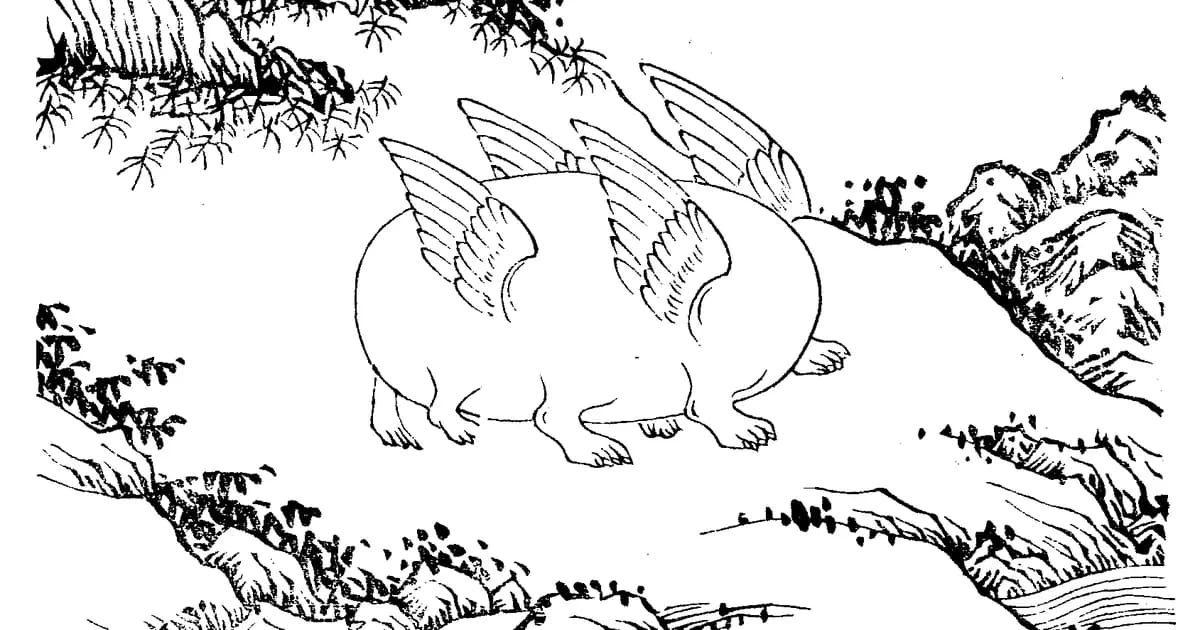
| Hundun (渾敦, 混沌) | Son of Di Hong (帝鴻氏); hid what was right and sheltered criminals | Chaos | A long-haired, dog-like beast west of Mount Kunlun, with eyes that cannot see and ears that cannot hear; it chews its own tail |
| Qiongqi (窮奇) | Son of Shaohao (少皞氏); "broke faith, threw out loyalty" and dressed up evil words (毀信廢忠,崇飾惡言) | Monster | A winged tiger in the northwest that eats people and understands their speech |
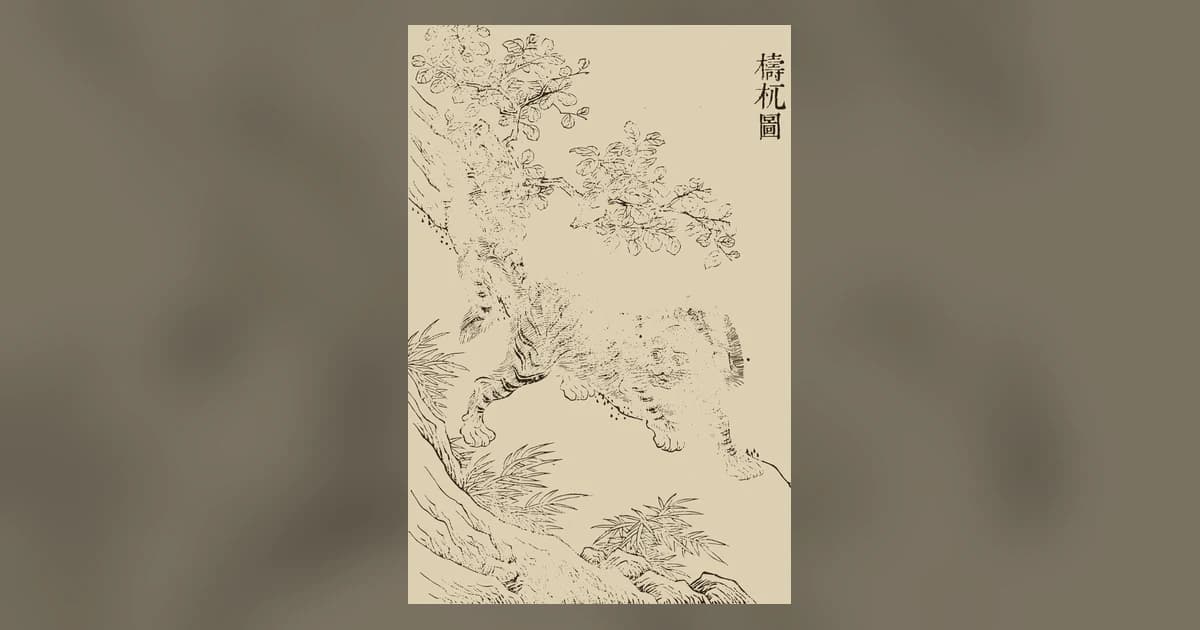
| Taowu (檮杌) | Son of Zhuanxu (顓頊); could not be taught and "did not know good words" (不可教訓,不知話言) | Block | A tiger with a dog's coat, a human face, a pig's tusks and a tail of one zhang eight chi |
| Taotie (饕餮) | Son of Jinyun (縉雲氏); greedy for food and drink, grasping for goods (貪于飲食,冒于貨賄) | Glutton | Not a beast: a hairy people of the southwest, "greedy as wolves," who rob the old and weak |
Hundun already has its own page on the faceless god of chaos, and so does Taowu. This page is about the four as a set, and about the two without a page of their own.
Why the oldest texts treat Taowu as a stubborn man rather than a beast, and why a chronicle of the state of Chu carried the same name.
Taowu in Chinese Mythology: A Four Perils Beast, Once a Man →
Three Clans, Then a Fourth: What Court Historian Ke Said
Ke's speech is built like a ledger. First the good side: the clan of Gaoyang had eight gifted sons, the Eight Kai (八愷), and the clan of Gaoxin had eight more, the Eight Yuan (八元). Yao never promoted them; Shun, serving as Yao's minister, did. Then the bad side. Three clans, Hundun's, Qiongqi's and Taowu's, "carried on their wickedness generation after generation" (世濟其凶), and Yao could not get rid of them either.
Taotie arrives last, almost as an afterthought. The son of the Jinyun clan hoarded without limit and gave nothing to orphans or widows, and "the people compared him with the three perils" (以比三凶) before they called him Taotie. So the set was three before it was four.
Shun then banished all four clans, "casting them out into the four distant regions, to meet the spite of the sprites and evil things," in Legge's English (投諸四裔,以禦螭魅). Ke then did the arithmetic for Duke Xuan: Shun became ruler on twenty great deeds, raising the sixteen worthies and expelling the four villains. Ji Wenzi had found no good man yet, but he had expelled one bad one, so he claimed a twentieth of Shun's merit (於舜之功,二十之一也). Sima Qian retold the four sons almost word for word in the opening chapter of the Records of the Grand Historian, and added that afterwards the four gates stood open "because there were no evil men" (於是四門辟,言毋凶人也).
That origin matters when you meet these names in fiction. Each one started as a verdict on a person's character, given as a reason to deport a prince who had killed his father.
How Four Exiles Became Four Beasts
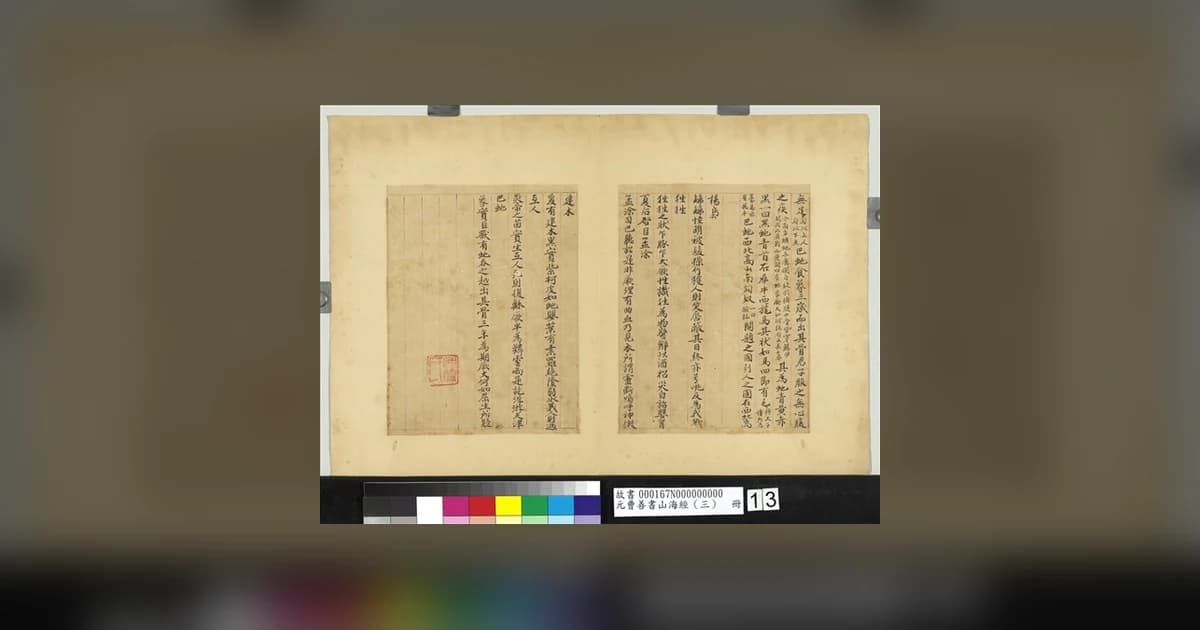
The Shan Hai Jing (Classic of Mountains and Seas) never names Taowu or Taotie in its main text, though Guo Pu's commentary says the man-eating Paoxiao (狍鴞) of Mount Gouwu, a sheep-bodied beast with a human face and eyes under its armpits, is the Zuo Zhuan's Taotie (左傳所謂饕餮是也). Qiongqi is the Peril it describes by name as a man-eater, twice, and the two entries don't agree on what it looks like. In the Western Mountains chapter, Qiongqi lives on Mount Gui and is "like an ox, with hedgehog hair," crying like a howling dog and eating people (其狀如牛,蝟毛…是食人). In the chapter on the lands within the northern seas it is a tiger with wings that eats people head first, or, says another version, feet first.
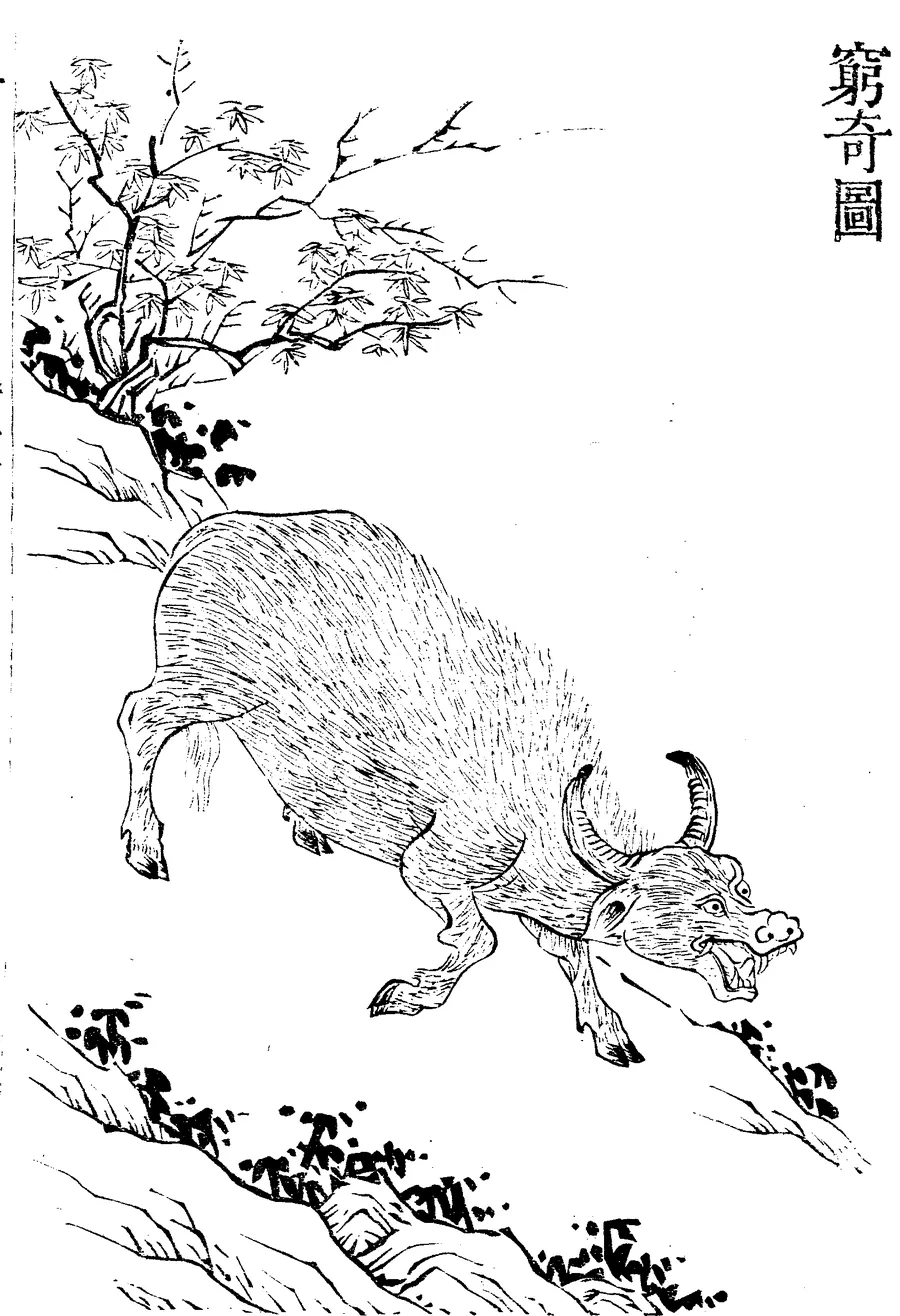 Image: Qiongqi Tu (窮奇圖) from the Gujin Tushu Jicheng, compiled by Chen Menglei, 1700-1725, public domain, via Wikimedia Commons
The Shenyi Jing (神異經, Book of Gods and Strange Things), credited to the Han writer Dongfang Shuo, is where all four get bodies. The Siku editors thought it a later forgery and placed it in the Six Dynasties (六朝文士影撰而成). Read its Siku text on Wikisource and you notice two things. Three of the four entries cite the Chunqiu by name to tie the creature to Ke's bad sons ("the Chunqiu says Hundun was the worthless son of Di Hong"), so the writer was working from that list. And all four sit on the western side of the map: Taotie in the southwest, Hundun and Taowu in the west, Qiongqi in the northwest. The Zuo Zhuan sent them to four frontiers; this book piles them all into one wilderness.
Taotie is the odd one out even there. The Shenyi Jing files it under people (人), not beasts: a nation with hairy bodies and pigs on their heads (頭上戴豕) who hoard wealth, rob the old and weak, and "fear crowds and attack the lone." The entry ends: "everyone in this country is like this."
Qiongqi Eats the Honest Man
Here is the entry that earns Qiongqi our vote. The Shenyi Jing says it understands human speech. When it hears two people quarreling, it eats the one who is in the right (輒食直者). When it hears of a loyal, trustworthy person, it eats his nose. When it hears of someone wicked, it kills an animal and brings it to him as a gift. That's a monster with a moral code turned upside down, and you could build an arc around that.
The odd part is that Qiongqi also has a respectable career as a demon-hunter. The commentary printed with the Shan Hai Jing on Wikisource carries a verse calling it hideous but saying it "chases off evil spirits" and is also known as the "divine dog" (馳逐妖邪…號曰神狗); Chinese Wikipedia credits the verse to the commentator Guo Pu. And in the Han court's Great Exorcism, held the day before the La festival, the Book of the Later Han lists twelve gods called on to hunt down evil; one line runs "Qiongqi and Tenggen together eat the gu" (窮奇騰根共食蠱), the poison spirits. The same name protects people in one text and eats the honest in another.
Taotie, the Face on the Bronzes
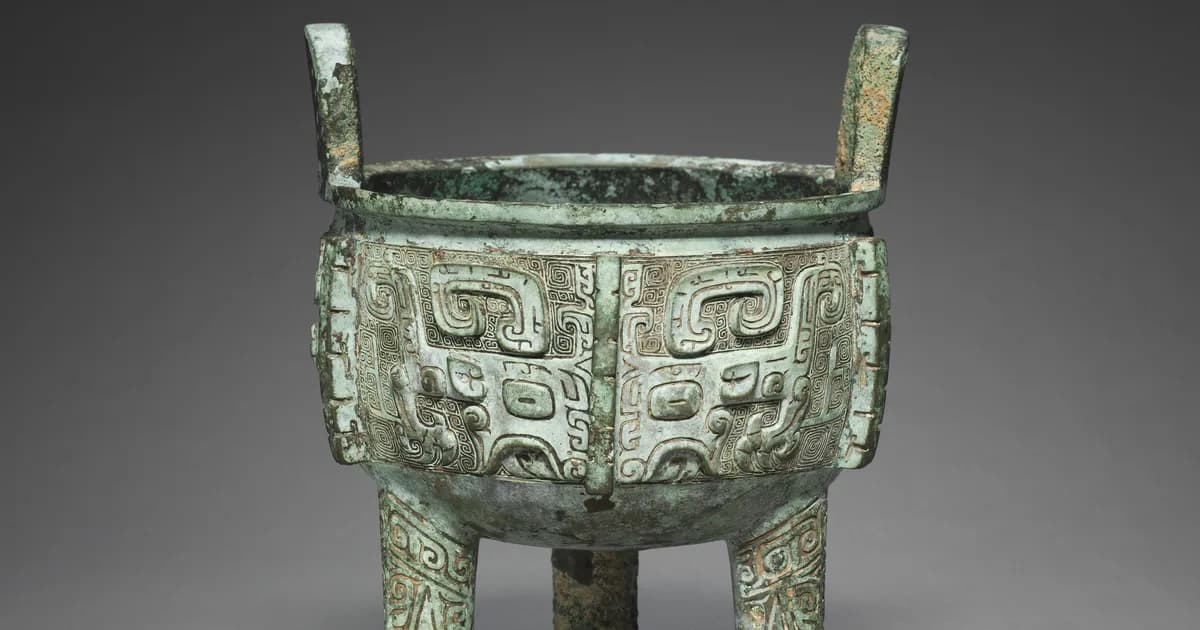
Taotie is the Peril you can still go and look at in a museum. The Lüshi Chunqiu says the bronze cauldrons of Zhou bore a taotie with "a head but no body," and that it devoured a man but came to harm before it could swallow him (食人未咽,害及其身). Our header image is a Shang ding from the Anyang phase, object 1962.281 at the Cleveland Museum of Art (CC0 via Wikimedia Commons), which dates it to about 1250-1046 BCE; the museum's own text calls its animal mask a taotie and "the most potent symbolic form" among animal images on ritual bronzes.
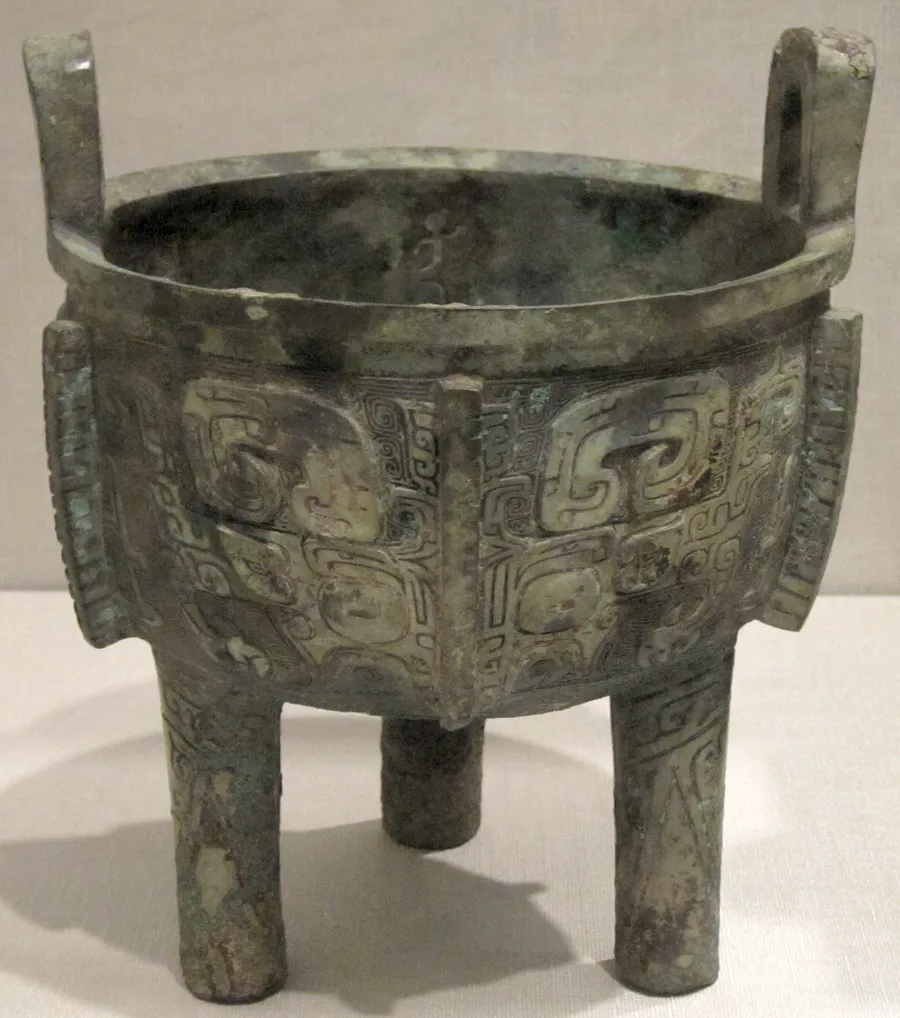 Image: Ding (vessel), China, Shang dynasty, c. 1500-1050 BCE, Honolulu Academy of Arts, photo by Hiart, CC0, via Wikimedia Commons
The Other List: Gonggong, Huandou, the Sanmiao and Gun
If you've seen a different set of four villains, you're thinking of the Book of Documents. Its "Canon of Shun" also has Shun banishing four, but by different names: Gonggong to Youzhou, Huandou to Mount Chong, the Sanmiao to Sanwei and Gun to Mount Yu, after which "the whole world submitted" (四罪而天下咸服). English Wikipedia files these as the Four Criminals.
Commentators have long treated the two lists as the same four people. In the Shiji with its three classic commentaries, the Tang scholar Zhang Shoujie's Zhengyi note says it outright: "Huandou is Hundun. Gonggong is Qiongqi. Gun is Taowu. The Sanmiao are Taotie." The Shenyi Jing partly matches it: right after Qiongqi in the northwest comes a man named Gonggong, and in the west it calls the Miao people taotie, greedy. Treat that as an old reading, not something the Zuo Zhuan itself says.
What else lives in the book that gave Qiongqi its ox and its wings, chapter by chapter.
Shan Hai Jing: Classic of Mountains and Seas Explained →
The Four Perils in Web Novels
In English web fiction, at least one translator has thought hard about these names. CKtalon, who translates Radiant Blade of the Wilderness on Webnovel, wrote in his note on the book page that "names of folklore creatures like Taotie could have been translated as Fiend of Gluttony, but would be kept in pinyin just like in the 2016 movie, The Great Wall." That film's monsters are the Tao Tie, spelled "Tao Tei." Our Radiant Blade of the Wilderness review covers the book itself.
Hundun mostly loses its name in translation: when we searched Webnovel for "hundun" on October 22, the search returned no results, while "primordial chaos" gave about a thousand (details on the Hundun page). When we went back to Webnovel's search on November 4 for this page, it showed Cloudflare's bot check instead of results, so we can't tell you how often Taotie or Qiongqi turn up there.
At least one fan series covers them. On r/noveltranslations, u/Galaxy-Fighter's "Chinese Mythology Archive" series gave Taotie its sixth episode, describing it as "known for its insatiable appetite and fearsome appearance" and claiming that Pokémon's Ting-Lu is "directly inspired by Taotie." We haven't checked the Pokémon claim, and it isn't ours to make.
Our Take on the Four Perils of Chinese Mythology
As a set, the Four Perils of Chinese mythology are thinner than their reputation. Each Shenyi Jing entry is a few lines long, and none of them has a story, a battle or a death. What they do give you is a set of character types. Hundun is the one who hides wrongdoing, Qiongqi the liar who punishes honesty, Taowu the man who can't be taught, and Taotie the hoarder. Those are four villains ready to drop into a sect.
If you only remember one, make it Qiongqi. Taotie has the bronzes and the film, and Hundun has the Zhuangzi. Qiongqi has the best idea: a monster that eats the honest and rewards the wicked. We'd like to see a novel use Qiongqi as a judge rather than one more beast to kill. For the beasts that are on the side of good, start with the Qilin or the guardian Azure Dragon of the East.
How We Checked This
On November 4, 2026 we read the Chinese texts on Wikisource: the Zuo Zhuan entry for the eighteenth year of Duke Wen, chapter 1 of the Shiji (plain and with the three commentaries), the "Canon of Shun," the Shenyi Jing (Siku text), the Western Mountains, Northern Mountains and Within the Northern Seas chapters of the Shan Hai Jing (plus the Siku edition of its third juan, for Guo Pu's commentary), Lüshi Chunqiu juan 16 and juan 15 of the Book of the Later Han (Siku text). English translations come from Wikipedia's Hundun, Taotie and Four Perils pages, and the Ju prince's story is checked against Chinese Wikipedia's entry on him. We also checked the Cleveland Museum of Art's record for the cauldron, the Wikimedia Commons file pages for all three images, the Radiant Blade book page on Webnovel (saved October 23) and one Reddit thread. We haven't read any novel that uses Qiongqi or Taowu by name.
Related Reading
- Hundun in Chinese Mythology: The Faceless God of Chaos
- Taowu in Chinese Mythology: A Four Perils Beast, Once a Man
- Shan Hai Jing: Classic of Mountains and Seas Explained
- Kunpeng: The Myth Behind Xianxia's Giant Sky Beasts
References
- Zuo Zhuan, Duke Wen (Wikisource, Chinese)
- Shiji, chapter 1, Annals of the Five Emperors (Wikisource, Chinese)
- Shiji with the three commentaries, chapter 1 (Wikisource, Chinese)
- Book of Documents, Canon of Shun (Wikisource, Chinese)
- Shenyi Jing (Wikisource, Chinese)
- Shan Hai Jing, Western Mountains (Wikisource, Chinese)
- Shan Hai Jing, juan 3 with Guo Pu's commentary, Siku edition (Wikisource, Chinese)
- Shan Hai Jing, Within the Northern Seas (Wikisource, Chinese)
- Lüshi Chunqiu, juan 16 (Wikisource, Chinese)
- Book of the Later Han, juan 15, Siku edition (Wikisource, Chinese)
- Wikipedia: Four Perils
- Wikipedia: Four Criminals
- Wikipedia: Qiongqi
- Wikipedia: Taotie
- Wikipedia: Hundun
- Wikipedia (Chinese): 窮奇
- Wikipedia (Chinese): 莒僕
- Cleveland Museum of Art: Tripod (Ding), 1962.281
- Webnovel: Radiant Blade of the Wilderness
- Reddit r/noveltranslations: Exploring Taotie
About the author

Danmei & Genre Explainers Desk
Pen name for NovelBrief's danmei and genre desk: xianxia and xuanhuan conventions, danmei licensing, what a print edition changes.
- Covers danmei, xianxia and xuanhuan, plus genre explainers
- Separates publisher-confirmed facts from fan speculation
- Flags content ratings when the source states them
Keep reading
Hundun in Chinese Mythology: The Faceless God of Chaos
Novels · 7 min
Taowu in Chinese Mythology: A Four Perils Beast, Once a Man
Novels · 8 min

Qilin in Chinese Mythology: Why Xianxia Turned It Into a Pet
Novels · 7 min
Shan Hai Jing: Classic of Mountains and Seas Explained
Novels · 7 min
Zhuque in Chinese Mythology: The Vermilion Bird of the South
Novels · 10 min
Qinglong in Chinese Mythology: The Azure Dragon of the East
Novels · 9 min
Baihu in Chinese Mythology: The White Tiger of the West
Novels · 7 min
Xuanwu in Chinese Mythology: The Black Tortoise, Then a God
Novels · 9 min
Disclaimer
This article is published for informational and entertainment purposes. It does not constitute professional financial, legal, or technical advice. Series availability, platform access, translation status, and chapter counts change. Verify critical details (pricing, regional availability, official translation status) with publishers and platforms. Affiliate links, where present, help support our editorial work and are labelled in our affiliate disclosure.