Loading…
NovelBrief · Novels
What Is Murim? Korean Martial Arts Fiction Explained
What is murim? Understand the Korean martial-arts world of clans, sects, and wandering fighters, plus how it differs from Chinese wuxia.
5 min readBy Mei-Lin Zhao
What is murim? It is the imagined martial society where Korean stories place their sects, clans, schools, masters, and wandering fighters. Think of it as a world running beside ordinary society, governed by martial reputation and factional alliances. If that sounds close to wuxia, it is. The distinction is cultural lineage and storytelling habit, not a hard wall.
TL;DR: What is murim? It is Korean martial-arts fiction's social world of clans, sects, and fighters. Start with its institutions, not a list of special moves.
Key Takeaways
- Murim is the Korean martial-arts fictional world, not the name of one series.
- It commonly uses clans, sects, martial schools, internal energy, and faction politics.
- Murim and wuxia overlap, but Korean serial fiction has developed its own rhythms and favorite setups.
- “Murim” describes a setting tradition; “web novel” describes how a work reaches readers.
Overview
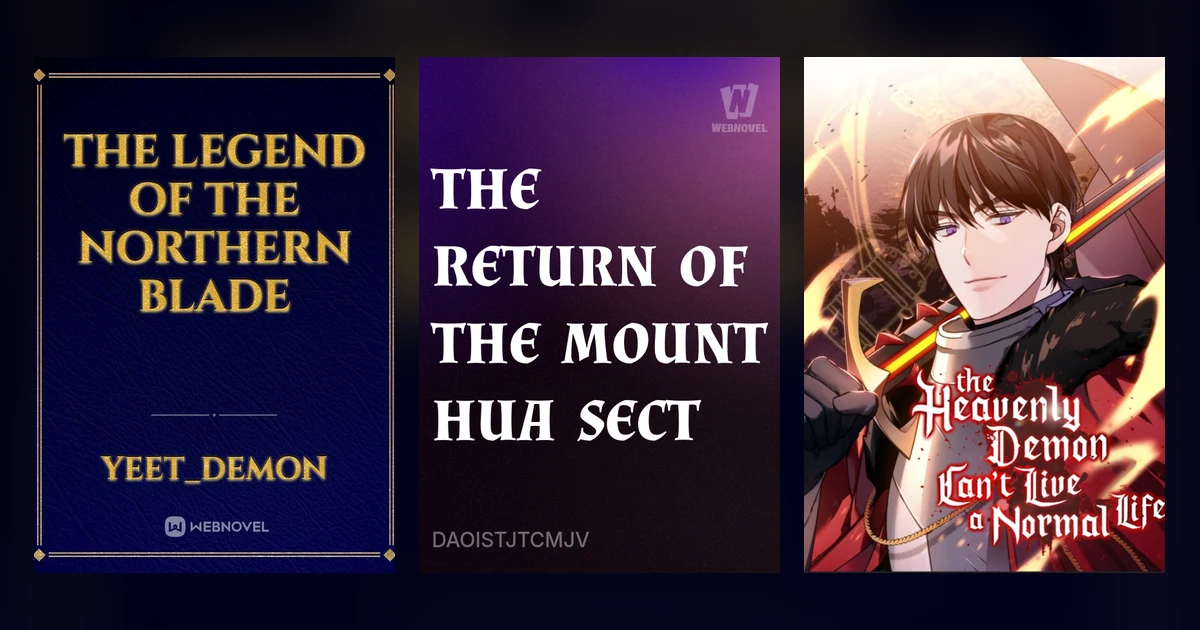 Three real, officially published murim novels: The Legend of the Northern Blade, Return of the Mount Hua Sect, and The Heavenly Demon Can't Live a Normal Life (all Webnovel.com).
The Korean word 무림 is commonly romanized as murim. In genre use, it names the social arena of martial artists: a place of inherited grudges, teacher-student lineages, closed-door training, and fragile alliances. A Naver Series listing can mark a work as 무협, the Korean category for martial-arts fiction, while its premise may still include regression or a visible system. The martial setting remains the anchor.
Readers often meet murim through a protagonist who returns to the past, enters a disgraced clan, or wakes with knowledge that does not fit the world around them. Those are plot devices, not definitions. The core promise is a society where martial ability changes status and where faction membership carries consequences.
What Is Murim Built Around?
Murim stories work when their institutions feel legible. A sect is not merely a training school; it controls techniques, loyalties, and access to senior figures. A clan can be a family, an army, and a political brand at the same time. The murim itself is where those institutions compete, cooperate, and turn an insult into a multi-arc problem.
That framework produces a different kind of progression from a generic fantasy academy. Advancement brings a new technique, but it also changes who can challenge you, recruit you, or demand repayment. Readers who enjoy status games and long-running rivalries tend to find that structure rewarding.
The Chinese cousin of this tradition has a different set of expectations.
What Is Xianxia? →
Murim vs Wuxia
Murim and wuxia share a family resemblance. Both can feature jianghu-like networks, honorable and corrupt schools, masters with named techniques, and fighters who live outside normal bureaucratic life. Wuxia is the Chinese tradition, with deep roots in stories of martial heroes and wandering knights. Murim is the Korean term and a Korean-developed genre space.
The more useful distinction is not a checklist of weapons or energy systems. It is the reader's expectation of voice and pace. Korean web fiction often folds murim into regression, system, dungeon, or academy premises. A traditional wuxia story may spend longer on codes of conduct, social obligation, and the moral price of violence. Both traditions can break those patterns, but knowing the default makes a recommendation more honest.
For a genre defined by broad fantasy freedom rather than martial society, see .
our xuanhuan explainer
What Is Murim for a New Reader?
Choose a story based on its pressure point. Pick a clan-revival premise if you want family politics. Pick a wandering protagonist if you want the road, rival schools, and shifting allegiances. Pick a system or regression premise only if you also want that extra layer. It should not be mistaken for a universal feature of murim.
Before committing, check where the English version comes from and how far it has been released. Serialized fiction rewards patience, but it should not demand blind loyalty. A strong opening should show what the protagonist wants, which institution blocks them, and why a martial skill changes the balance.
Murim also gives violence a social memory. A duel can change how a sect sees a disciple, while a public defeat can weaken a clan's bargaining position. That consequence is the point. It turns teachers, minor rivals, and old debts into plot pressure instead of disposable names.
Violence has a social memory in a convincing murim story. A duel changes how a sect sees a disciple, and a public defeat changes a clan's bargaining power. That attention to consequence separates a martial setting from disconnected fights. It gives readers a reason to remember minor rivals, teachers, and debts.
Frequently Asked Questions
What does murim mean?
Murim is the Korean term used for the fictional martial-arts society of sects, clans, masters, and fighters.
Is murim the same as wuxia?
They overlap strongly, but murim is the Korean genre tradition and wuxia is the Chinese one. Their tone and conventions can differ.
Do murim stories have magic?
Some do, but many focus on martial techniques, internal energy, rival sects, and political conflict rather than supernatural immortality.
What is the murim world?
It is the separate martial society inside a story, with its own factions, codes, schools, and conflicts.
Can a murim story be a web novel?
Yes. Murim is a genre and setting tradition, while web novel describes a serialized publishing format.
Related Reading
References
About the author

Danmei & Genre Critic
Danmei and xianxia critic with a background in comparative literature, writing about Chinese web fiction in English since 2019. Toronto-based.
- Writing about danmei and xianxia in English since 2019
- Graduate background in comparative literature
- Tracks the fan-translation-to-official-license pipeline
- Follows Seven Seas' convention announcements directly

Disclaimer
This article is published for informational and entertainment purposes. It does not constitute professional financial, legal, or technical advice. Series availability, platform access, translation status, and chapter counts change. Verify critical details (pricing, regional availability, official translation status) with publishers and platforms. Affiliate links, where present, help support our editorial work and are labelled in our affiliate disclosure.
Comments
Loading comments…