Loading…
NovelBrief · Novels
Murim vs Wuxia: The Difference Explained for Readers
Murim vs wuxia explained: murim is a Korean tradition built from wulin, while wuxia is Chinese martial-hero fiction with different defaults.
8 min readBy Mei-Lin Zhao
TL;DR: Murim vs wuxia is not a simple Korea-versus-China map. Wuxia is Chinese martial-hero fiction. Murim is the Korean reading of 武林, or wulin, and the modern Korean genre tradition built from that martial-world idea. They share sects, qi, and wandering fighters, but their publication histories, pacing, and default story engines differ.
Key Takeaways
- Wuxia (武侠) centers martial heroes and the social world often called jianghu.
- Murim (무림) comes from Chinese 武林, but contemporary murim fiction is primarily a Korean creative tradition.
- Both genres can use internal energy, sects, rival alliances, and spectacular swordplay.
- Murim serials more often foreground regression, reconstruction, explicit rankings, and webtoon-friendly hooks.
- Neither label guarantees historical accuracy, realism, romance, or a specific power ceiling.
Murim vs Wuxia: The One-Sentence Distinction
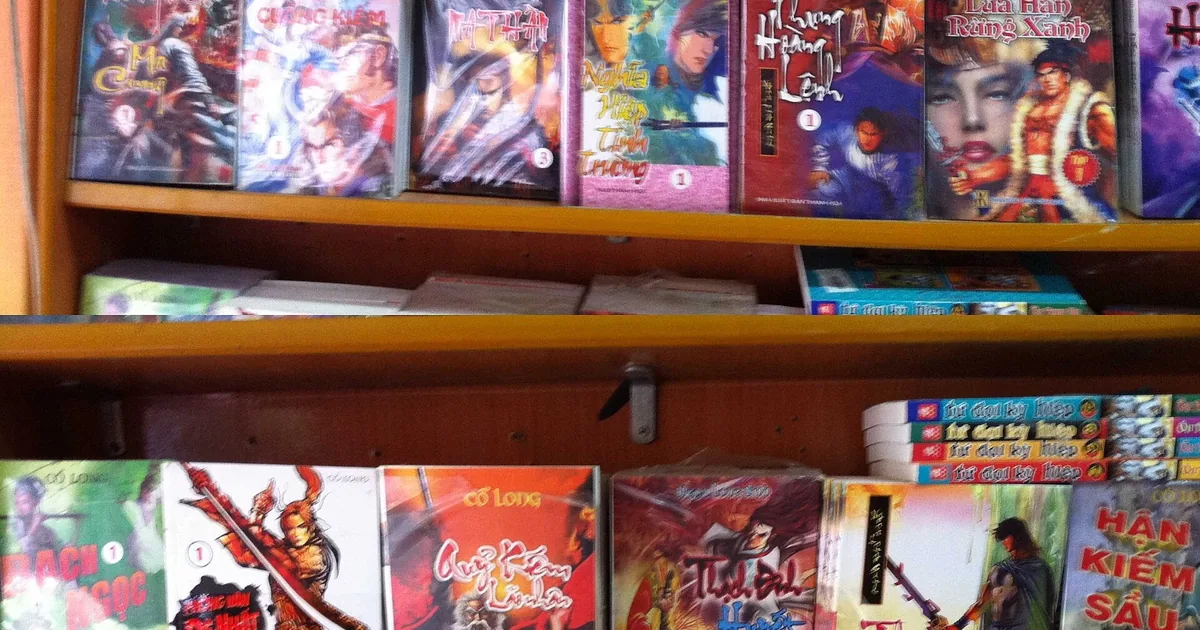 A Wikimedia Commons photograph by Newone, licensed CC BY-SA 3.0, showing wuxia novels on a Vietnamese bookstore shelf. It is a real publishing context, not an unofficial web-novel cover.
If you need one sentence, use this: wuxia is Chinese martial-hero fiction, while murim is the Korean genre tradition that organizes a martial world through Korean serial conventions. In Korean terminology, 무협 (muhyeop) is the genre reading of wuxia, 무림 (murim) is the martial world inside it, and 강호 (ganghu) is the reading of jianghu. English fandom often collapses those distinctions into the single label “murim.”
The distinction is about creative tradition, not whether a story contains a bamboo forest. Korean murim can look deliberately China-inspired, and Chinese wuxia can be translated for Korean audiences. Labels travel across languages, so this page compares defaults rather than drawing an airtight border.
What Wuxia Usually Promises
Wuxia literally combines the idea of martial arts with the xia, a heroic or chivalrous figure. The genre grew through Chinese fiction, especially twentieth-century popular novels, films, and television. A wuxia story often places a wandering fighter inside jianghu, the social space of martial artists, officials, merchants, and sects. Honor, loyalty, debt, and personal justice matter because the protagonist's choices have consequences beyond a tournament bracket.
Wuxia can exaggerate physical ability. Heroes may cross rooftops, throw concealed weapons, or perform feats a real athlete could not reproduce. That does not automatically make the story xianxia. The useful question is whether the plot is still organized around human-scale martial society and heroic conduct, or whether the pursuit of immortality and cosmic transcendence has taken over.
The genre also does not guarantee moral simplicity. A wuxia antihero can lie, betray, or use a questionable technique. “Chivalry” describes a tension the story can explore, not a promise that every protagonist behaves nobly.
What Murim Usually Adds
Modern Korean murim fiction inherits wulin vocabulary but adapts the serial engine. A story may open with a destroyed sect, a returned master, a healer rebuilding a clan, or an assassin trying to rewrite a future. Rankings, alliances, and named techniques are often made very explicit because the reader may encounter the story in a webtoon or mobile chapter feed.
That format encourages quick, legible stakes. A protagonist can have a past life, a known “peak” to recover, and a clear list of institutions blocking the route. None of those devices is mandatory, but they are common enough to change how a reader enters the story. A Korean murim novel can therefore feel more systematized than a classic wuxia even when both use qi and sects.
I enjoy murim most when the institutional detail creates choices rather than just bigger numbers. A sect's reputation should affect who offers food, training, or information. If every alliance is only a label above the next fight, the borrowed vocabulary becomes decoration.
Murim vs Wuxia Difference at a Glance
| Feature | Wuxia | Murim | What neither label guarantees |
|---|---|---|---|
| Origin of the modern genre | Chinese martial-hero fiction | Korean adaptation and web-fiction tradition | Historical accuracy |
| Core social space | Jianghu and wulin | Murim, often sect-centered | One fixed map |
| Common protagonist | Wandering martial hero | Returner, sect heir, healer, or strategist | A heroic personality |
| Typical escalation | Skill, reputation, moral choice | Skill plus rank, regression, and institutional rebuilding | Realistic physics |
| Relationship to cultivation | Usually martial and low fantasy | Can stay martial or expand into high fantasy | A single power ceiling |
The comparison is a tool for choosing a first chapter, not a verdict on quality. A Korean author can write a quiet, historically grounded martial story. A Chinese author can write a loud fantasy serial. Genre labels tell you which conventions to check first.
What Is Murim? traces the 武林-to-murim vocabulary path in more detail.
Shared Vocabulary Does Not Mean Shared History
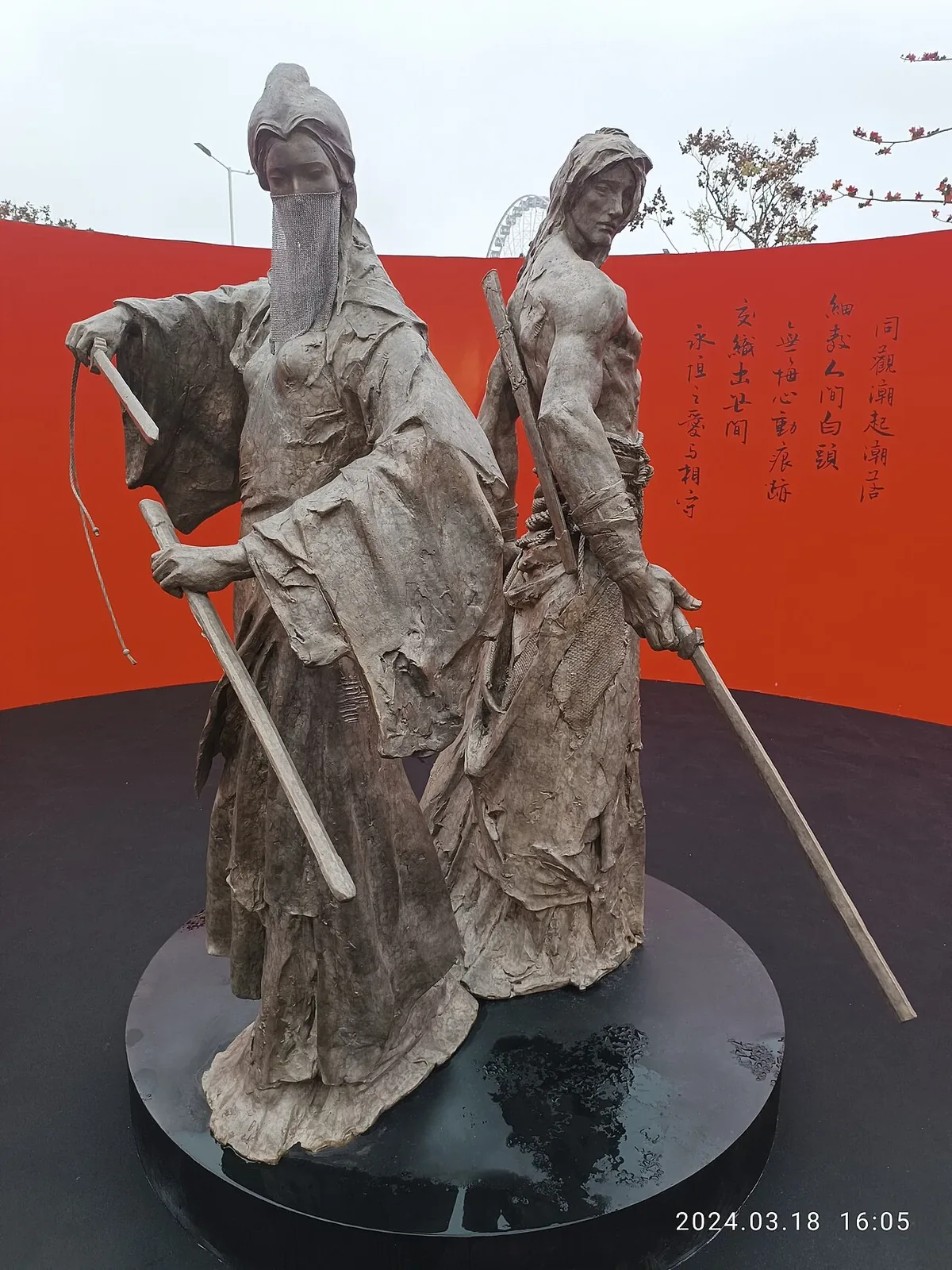 A CC0 Wikimedia Commons photograph by GREALANME KAM of a Jin Yong memorial sculpture exhibition. The image is an open-license wuxia reference, not cover art for a specific novel.
Sects, inner energy, manuals, orthodox alliances, and demonic cults appear across both traditions because creators borrow a useful set of institutions. The borrowing is visible and worth acknowledging. It is not a reason to say every murim title is a Chinese novel with Korean names, or that every wuxia title is a fantasy version of a Korean manhwa.
Translation makes the overlap even harder to see. English editions may keep terms such as jianghu, murim, qi, or internal energy in pinyin or romanized Korean. A platform tag may call all of them “martial arts.” Read the synopsis and credited origin before making a cultural claim about a title.
Reddit discussions are useful here because readers notice details a catalog compresses: Korean food in one story, Chinese court titles in another, or a translation that uses “martial forest” where a fan expects “murim.” These are observations from individual works, not a universal test. The best use of community evidence is to generate questions for the text, not to replace it.
What Murim and Wuxia Do Not Guarantee
Neither genre guarantees romance, clean translation, a satisfying ending, or a protagonist who stays morally consistent. Neither guarantees that the setting's historical references are researched. The labels also do not tell you whether the series is completed, licensed, or affordable in English.
This matters when recommendation lists flatten the difference into “Korean wuxia.” That phrase can help a new reader search, but it hides the exact thing they may want: Korean serial pacing, sect economics, and regression structure. Conversely, calling a Chinese wuxia classic “murim” can make readers expect a power ladder and a returner hook that the book never promised.
How to Choose Between Them
Choose wuxia if you want a wandering hero whose choices reshape a martial society, a Chinese historical frame, and conflict grounded in reputation and loyalty. Start murim if you want sect rebuilding, explicit martial institutions, faster web-serial hooks, or a protagonist returning with knowledge of a failed future.
Then read ten to twenty chapters and ask a practical question: what does the story treat as the scarce resource? In wuxia it may be trust, honor, or safe passage through jianghu. In murim it may be time, information, a sect's reputation, or a lost technique. That answer is more useful than the label alone.
For the neighboring immortal-cultivation label, Wuxia vs Xianxia shows where cosmic transcendence changes the reading contract.
Frequently Asked Questions
What is the main difference between murim and wuxia?
Wuxia is Chinese martial-hero fiction, while murim is a Korean genre tradition built from the Chinese wulin idea and adapted through Korean novels, manhwa, and webtoons.
Is murim just Korean wuxia?
Murim was strongly influenced by wuxia, but modern Korean murim adds its own serial patterns, regression stories, sect politics, and character priorities. It is better understood as an adaptation tradition than a synonym.
Do murim and wuxia use the same power system?
They can share qi, internal energy, sect training, and martial techniques, but murim may add game systems, reincarnation, or extreme fantasy that grounded wuxia would not.
Is wuxia always realistic?
No. Wuxia can use exaggerated martial feats and low fantasy. Its usual distinction from xianxia is the focus on martial heroes and jianghu society rather than immortal transcendence.
Which should I read first, murim or wuxia?
Choose wuxia for wandering heroes and Chinese jianghu traditions; choose murim for Korean serial pacing, sect reconstruction, regression hooks, and a martial world that can stretch into fantasy.
Why do both genres use sects?
Sects provide training, loyalty, status, and conflict in a martial society. The shared institution comes from overlapping genre vocabulary, not proof that the stories belong to one national tradition.
Related Reading
- Is Murim Chinese or Korean?
- What Is Murim?
- Murim Novel With an OP MC
- Wuxia vs Xianxia
- Best Wuxia Novels in English
- A Modern Man Transmigrated Into Murim: Where to Read
References


About the author

Danmei & Genre Critic
Danmei and xianxia critic with a background in comparative literature, writing about Chinese web fiction in English since 2019. Toronto-based.
- Writing about danmei and xianxia in English since 2019
- Graduate background in comparative literature
- Tracks the fan-translation-to-official-license pipeline
- Follows Seven Seas' convention announcements directly
Keep reading
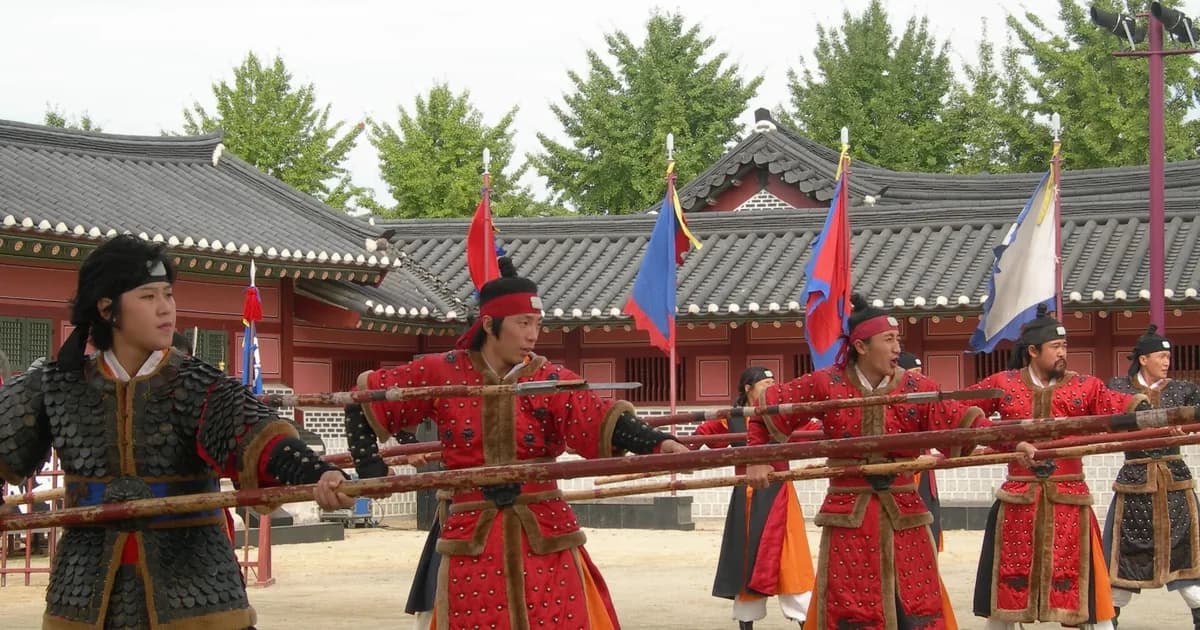
Is Murim Chinese or Korean? Origin and Genre Explained
Novels · 8 min
3 Murim Novels With a Female MC: Official Webnovel Picks
Novels · 6 min
Double Agent of the Heavenly Demon Sect: Full Review
Novels · 5 min
Murim Novel With OP MC: Five Picks Worth Starting Today
Novels · 5 min
What Is Murim? Korean Martial Arts Fiction Explained
Novels · 5 min
Kakao Shuts Down Tapas Web Novel Access: Reader Guide
News · 7 min
The Future of Wuxia: Translation Is the Next Fight
Genre Explainers · 7 min
Best Xianxia Novels With Romance Worth Reading in 2026
Novels · 5 min
Disclaimer
This article is published for informational and entertainment purposes. It does not constitute professional financial, legal, or technical advice. Series availability, platform access, translation status, and chapter counts change. Verify critical details (pricing, regional availability, official translation status) with publishers and platforms. Affiliate links, where present, help support our editorial work and are labelled in our affiliate disclosure.
Comments
Loading comments…