Loading…

NovelBrief · Novels
Ruzhui Explained: What the Matrilocal Marriage Trope Means
Ruzhui means entering the wife's family in a Chinese marriage context. Learn how it differs from matrilocal residence and what fiction labels leave open.
8 min readBy Mei-Lin Zhao
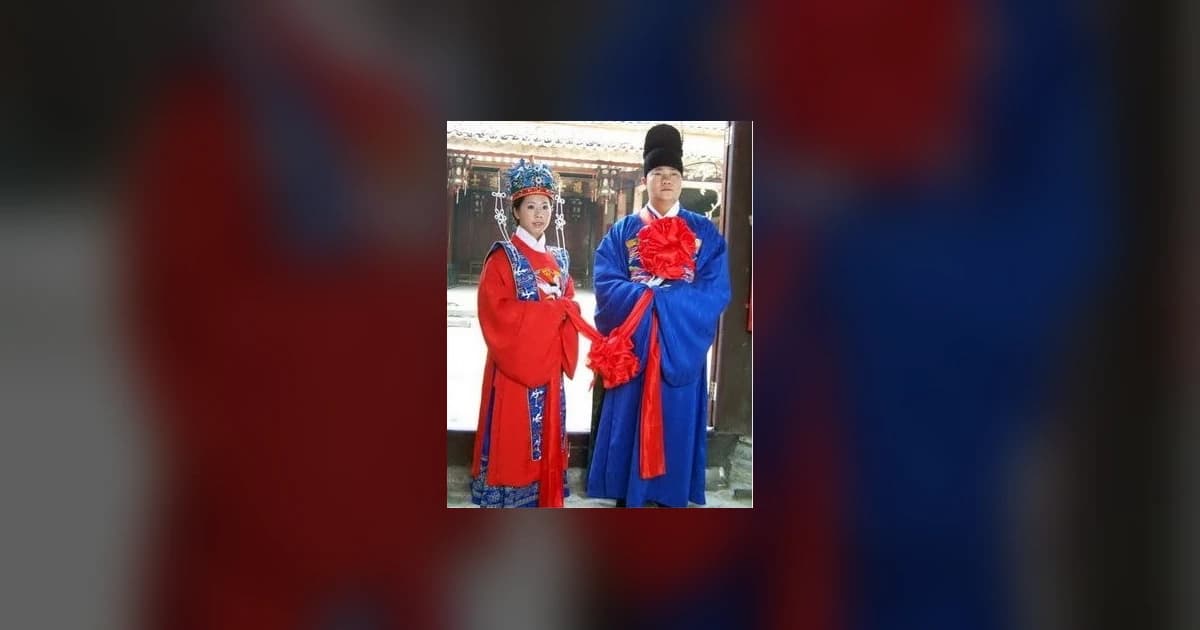
Ruzhui is a compact Chinese term with a much larger social context. Written 入赘, it describes a man entering the wife's family through marriage. English-language fiction often glosses it as a matrilocal marriage, but that translation can hide important differences. This guide separates the Chinese term, the anthropological residence label, and the extra plot rules a novel may add.
TL;DR: Ruzhui, 入赘, means a man entering his wife's family through marriage. The academic sources cited here describe it as matrilocal marriage in which the children take the wife's family name and continue her line, usually for a family without a son. The English labels "matrilocal" and "uxorilocal" overlap with ruzhui but do not capture all of it.
Key Takeaways
- Ruzhui is written 入赘 and centers on a husband entering the wife's family.
- Matrilocal residence is a broader description of where a married couple lives in relation to the wife's family.
- In the scholarship cited here, the children of a ruzhui marriage take the wife's family name, which is why families without sons used it to continue a line.
- The trope can create status pressure without making every character or relationship identical.
- The licensed Seven Seas edition is titled Matrilocal Marriage: Ruzhui (Novel), so edition facts belong to the publisher page.
Ruzhui: The Chinese Term in Context
Academic sources describe ruzhui as a marriage form in which the man enters the wife's family. A Macau Cultural Institute paper identifies the Chinese term 入赘, while research hosted by the University of Edinburgh uses “matrilocal residence” for the arrangement. A Japanese study explains the word's structure as entering the wife's household. The Edinburgh thesis is an ethnography of grandparenting in a Chinese village. It defines ruzhui as a matrilocal marriage in which the couple's children take the mother's surname and count as her family's line, which lets grandparents without sons keep their family name going. The Macau paper, discussing a literary work, adds that such a husband is inducted into the wife's household and that traditional society could see the arrangement as a disgrace, because it broke the male line of descent. These sources point in the same direction, but they also show why one English gloss cannot carry every regional or historical detail.
In fiction, a ruzhui husband may be treated as an outsider, an heir, a bargain, a political solution, or a loved partner. The plot decides which pressure matters. The term supplies the household direction. It does not tell you whether the wife's family is kind, whether the husband is poor, or whether the couple chose the arrangement freely.
The first scene that uses the label is therefore worth reading closely. Ask who has authority over the home, whose kin network provides support, and what the marriage is expected to solve. Those questions reveal more than translating 入赘 as “live-in son-in-law” and moving on.
Ruzhui and Matrilocal Marriage Are Related, Not Identical
Matrilocal residence is an anthropological term for living with or near the wife's family after marriage. Uxorilocal is another term used in scholarship. Both describe residence patterns. Ruzhui also carries a social meaning about the husband entering the wife's family, and it can imply status, obligation, or household membership beyond the address.
A note in a Hong Kong University Press volume on women and regional culture in South China (Siu, ed., 2010) makes the caution sharper. It says "uxorilocal marriage" is one suggestion for translating ruzhui, but that uxorilocality implies a wife-centered household, while in the historical Pearl River Delta context ruzhui was a way for outsiders to gain settlement rights. The overlap is useful for a reader, but the difference prevents over-reading. A couple can live near the wife's parents without the husband being a ruzhui son-in-law. Conversely, a fictional ruzhui arrangement may be presented through a household contract, inheritance expectation, or public status that an English residence label does not capture.
This is why I avoid declaring that every ruzhui story reverses all gender roles. The setup may challenge patriarchal expectations, but a novel can still give one family more power than another. It may also use the trope to criticize class, lineage, or the idea that marriage is only a private romance.
Seven Seas' Matrilocal Marriage license covers the publisher's English edition, author Qing Jun Mo Xiao, and the release information visible on the series page. This explainer focuses on the term itself.
The Seven Seas danmei and baihe license tracker shows where the licensed title sits among other publisher announcements.
What the Trope Can Add to a Novel
The first engine is household status. A husband entering the wife's family may be judged by relatives who believe he has surrendered independence, or by outsiders who see the marriage as a transaction. That pressure can make a quiet domestic scene carry political weight.
The second engine is inheritance and continuity. A family may need an heir, a caretaker, or a public alliance. Those goals can turn the couple into representatives of a lineage. The scholarship cited here treats continuing the wife's line as the usual motive, but the novel's own household rules decide the details.
The third engine is romantic negotiation. Love, duty, and public shame can point in different directions. A story may ask whether a character is being welcomed or absorbed, protected or controlled. Those are narrative questions, not dictionary definitions.
The fourth engine is gendered expectation. A novel can use ruzhui to expose how marriage assigns labor and authority. It can also make the husband the emotional center without erasing the wife's family power. The trope is a starting structure, not a guarantee that the story will be progressive.
For a broader vocabulary map, What Is Danmei? explains how translated genre labels work, while the Seven Seas danmei and baihe tracker places the English license in a larger catalog.
What Ruzhui Does Not Guarantee
Ruzhui does not tell you the wife's family is kind, that the husband is poor, or that the marriage is emotionally equal, and it does not prove the wife is wealthy or domineering. The sources above tie it to the wife's family name and descent line, so a novel that leaves that dimension out is making a choice. Other details, such as who pays what at the wedding or whether the couple stays with her parents for good, are not covered by the sources cited here, so a story has to establish them.
It also does not mean every translation should erase the Chinese word. “Matrilocal marriage” helps a new reader, while ruzhui preserves the social specificity. A good edition can use both: define the term once, then let the context carry it.
The English title Matrilocal Marriage: Ruzhui (Novel) shows that publisher metadata can make both terms visible. The Seven Seas series page is the authority for the licensed edition. When checked on September 30, 2026 it listed volume 1 at $19.99 with a release date of August 24, 2027, so the book is not on sale yet.
Reading a Ruzhui Story Without Flattening It
Track four relationships: the couple, the wife's household, the husband's natal family, and the public community. Note who speaks for the marriage in each setting. Then ask whether a character is obeying a custom, negotiating it, or using it as a weapon.
Pay attention to verbs. “Enters,” “joins,” “marries into,” and “moves near” are not interchangeable in a translation. If a translator retains ruzhui, use the first explanation as a key, then read the rest of the story for the specific arrangement.
Finally, separate the trope from the review question. Best danmei novels licensed in English can help you choose a title, but a license list cannot tell you whether a particular ruzhui relationship is tender, coercive, comic, or political. The scenes decide.
Frequently Asked Questions
What does ruzhui mean?
Ruzhui, 入赘, describes a man entering the wife's family through marriage. Academic sources also use matrilocal or uxorilocal language, with local variation.
Is ruzhui the same as matrilocal marriage?
They overlap, but matrilocal residence is a broader residence label. Ruzhui carries Chinese social and marriage context that may include status or household obligations.
Does ruzhui involve a surname change?
The academic sources cited here describe the children taking the wife's family name. Details vary by place and era, and a novel may set its own rules.
Why use the trope in web novels?
It creates a pressure point around household authority, inheritance, gender expectations, and romance.
Where can I read a licensed novel using this trope?
Seven Seas lists Matrilocal Marriage: Ruzhui (Novel), with volume 1 dated August 24, 2027 when checked. Check its current official series page for edition details.
Related Reading
- Seven Seas Matrilocal Marriage License
- Seven Seas Danmei and Baihe License Tracker
- What Is Danmei?
- Best Danmei Novels Licensed in English
- What Is Danmei?
References
- Seven Seas: Matrilocal Marriage: Ruzhui Novel
- DanmeiNews license announcement
- Macau Cultural Institute research PDF
- Hong Kong University Press: Merchants' Daughters: Women, Commerce, and Regional Culture in South China, ed. Helen F. Siu (2010), preview PDF
- University of Edinburgh research PDF
- Japanese research paper on ruzhui
- Hero image: Traditional chinese wedding by Supersentai, licensed CC BY-SA 3.0, via Wikimedia Commons. The photo is a general wedding illustration, not a depiction of a ruzhui marriage.

About the author

Danmei & Genre Critic
Danmei and xianxia critic with a background in comparative literature, writing about Chinese web fiction in English since 2019. Toronto-based.
- Writing about danmei and xianxia in English since 2019
- Graduate background in comparative literature
- Tracks the fan-translation-to-official-license pipeline
- Follows Seven Seas' convention announcements directly
Keep reading

Seven Seas Danmei Baihe License Tracker: 2026 Guide
Novels · 10 min
What Is Danmei? A Beginner's Guide to Chinese Fiction
Novels · 7 min
Mo Dao Zu Shi Novel Guide: English Volumes and Reading Order
Guides · 10 min

Best Danmei Novels Licensed in English (2026): Eight Picks
Novels · 9 min
The Exorcism Universe Explained: What's Actually Out
Novels · 5 min
Priest Author Profile: 4 Danmei Books Beyond Sha Po Lang
Novels · 8 min

Best Xianxia Novels With Romance Worth Reading in 2026
Novels · 5 min

My Wandering Spirit Lady: Seven Seas' New Baihe Novel
News · 5 min
Disclaimer
This article is published for informational and entertainment purposes. It does not constitute professional financial, legal, or technical advice. Series availability, platform access, translation status, and chapter counts change. Verify critical details (pricing, regional availability, official translation status) with publishers and platforms. Affiliate links, where present, help support our editorial work and are labelled in our affiliate disclosure.
Comments
Loading comments…