Loading…

NovelBrief · Guides
My House of Horrors Reading Guide: Start With Chapter 1
Use this My House of Horrors reading guide to start at chapter 1, track the completed 1,211-chapter Webnovel run, and pace its shifting scares.
11 min readBy Mei-Lin Zhao
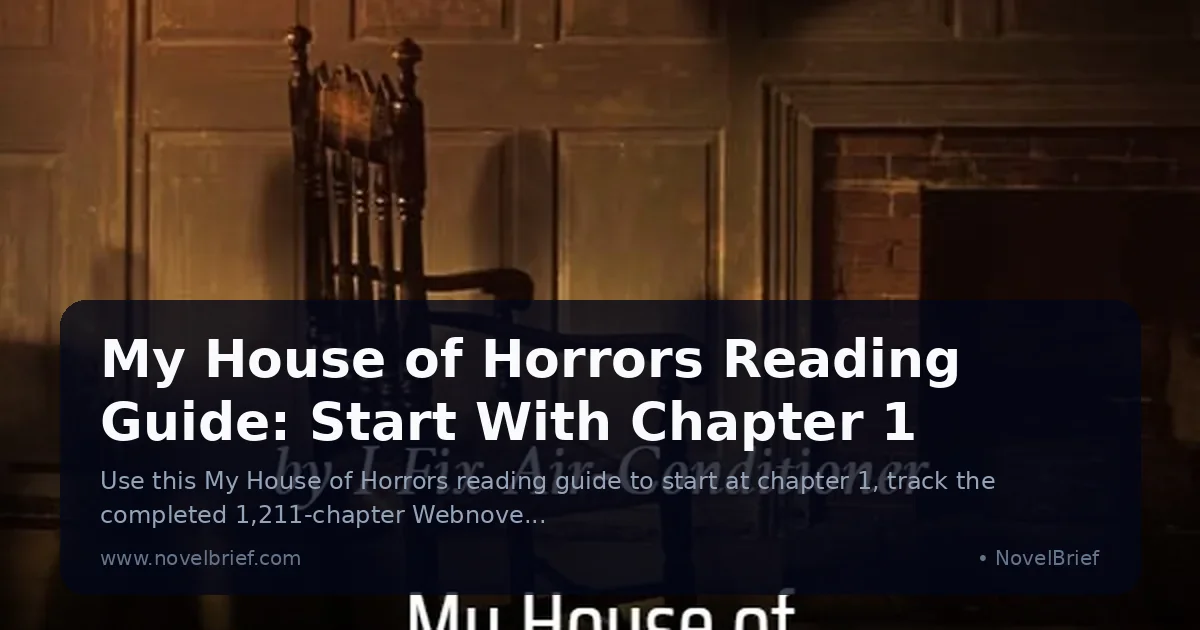
This My House of Horrors reading guide starts with the detail that makes the whole serial easier to read: the haunted attraction is failing. The published review identifies Chen Ge as a proprietor with a practical deadline, I Fix Air-Conditioner as the author, and Webnovel's English catalog as complete at 1,211 chapters with Millman97 credited as translator. Begin with chapter 1, then let the attraction's business problem teach you how to read the scares.
TL;DR: Start My House of Horrors at Webnovel chapter 1, “Dying House of Horrors,” and follow the completed 1,211-chapter catalog in order. Track the attraction, Chen Ge's investigations, and recurring employees instead of expecting every chapter to remain one narrow kind of horror.
Key Takeaways
- Chapter 1 is the correct entry point because the failing attraction is the story's first concrete problem.
- Webnovel lists the series completed at 1,211 chapters, with I Fix Air-Conditioner as author and Millman97 as translator in the source review.
- The official opening mixes a business deadline with nighttime unease, so read the practical setup instead of jumping to a later scare.
- The long run broadens into investigation, recurring relationships, and lighter release valves; reader discussion describes that shift as a possible tone mismatch for some horror fans.
- Use chapter title, number, and the attraction's current condition as your return marker.
My House of Horrors Reading Guide: What to Know First
This is a navigation guide, not the review's 8.8/10 verdict. It tells you where to begin, what to notice in the opening, and how to pace a completed 1,211-chapter serial whose horror expands beyond one haunted building. It does not promise that every later chapter uses the same scare pattern.
The source review gives you a strong opening contract. Chapter 1 is titled “Dying House of Horrors.” Chen Ge sees students leave after calling the attraction dull, considers how films have made visitors harder to frighten, and faces the possibility that the business cannot survive. The supernatural is already nearby, but the first pressure is ordinary: an empty attraction, disappointed customers, and a proprietor who needs to change the space.
That setup matters because later rooms, props, and visitors have a baseline. If you start with an isolated clip or a summary of a later incident, you may know that the novel becomes frightening without understanding why the attraction itself creates tension. Read chapter 1 as a workplace problem that has begun to behave impossibly.
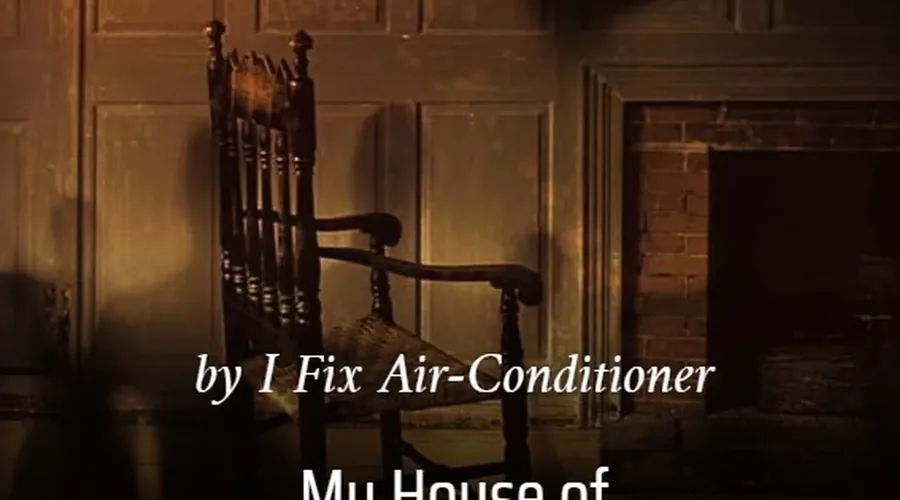 The cover crop is taken from the verified Webnovel artwork used by the review sibling.
Step-by-Step
1. Open the official catalog: Use the My House of Horrors Webnovel catalog to confirm the title, author, completion label, and current chapter list. Save the series page before you search for recommendations.
2. Start with chapter 1, “Dying House of Horrors”: Read the opening business problem before looking for a later monster or a list of the most frightening chapters. The attraction's failing reputation explains why Chen Ge has a reason to enter rooms and test ideas instead of simply running away.
3. Follow the numbered catalog in order: Use the completed 1,211-chapter Webnovel run as your sequence. A chapter title can serve as a better bookmark than a browser tab because platform interfaces and copied lists can present the same work differently.
4. Record the attraction's current condition: At each checkpoint, note one change to the house, one problem Chen Ge is investigating, and one recurring person or employee. Those three details keep the workplace frame visible when the world grows stranger.
5. Separate official facts from reader tone reports: The catalog can verify author, translator, chapter count, and completion. A Reddit discussion can tell you that readers experienced a shift toward investigation, comedy, or uneven side-character attention, but it cannot define every later chapter. Label those two kinds of notes differently.
6. Finish the catalog before hunting a complete scare list: Do not turn a “best horror chapters” search into your reading order. Finish the numbered sequence first, then compare your favorite sections with another reader's list. The completed status makes that a safe post-read activity rather than a spoiler source.
Why Chapter 1 Starts With a Business
The attraction's failing business is more than a quirky hook. It gives Chen Ge a reason to keep returning to a place that ordinary visitors already dislike. Students leave unimpressed, flyers do not solve the problem, and the house has the exhausted feeling of an amusement corner people have stopped noticing. That practical pressure makes the first supernatural change land harder.
The official Chapter 1 link in the source review also points toward the sharper premise: an early 3 a.m. encounter with a cleaver and a crowded house. Read that image after you understand the empty attraction, not before. The contrast between a nearly abandoned business and a house that suddenly contains too many people is part of the opening's tension.
This is the information a generic recommendation often loses. The novel does not begin with Chen Ge as a passive tourist in a cursed mansion. He has work to do. He must make the attraction function, decide what visitors should see, and deal with the consequences when the rooms refuse to stay ordinary. Keep that incentive in your notes as the catalog expands.
For another completed long serial that turns a small local problem into a wider mystery, compare without assuming the two books share a tone.
the Lord of Mysteries review
Tracking Horror, Investigation, and the Recurring Cast
Use three labels for your own notes: scare, investigation, and relationship. A chapter can earn more than one label. The scare tells you what changed the atmosphere. The investigation records what Chen Ge learned or tested. The relationship label records which employee, visitor, or ally gained a reason to matter again.
This system keeps you from expecting the serial to remain a sequence of isolated haunted-house episodes. The review source describes a growing mix of horror, investigation, comedy, and recurring employees in reader discussion. That is a report of reader experience, not a guarantee about a specific chapter. It is still useful because it tells a prospective reader what kind of tonal change to watch for.
If a side character feels thin, mark the impression and continue rather than searching for a later explanation. Reader discussions can be valuable after you finish a section, but an unfiltered search is an efficient way to learn a reveal early. Use the official chapter page first; use community commentary only when you are ready for its spoiler level.
Pacing a Completed 1,211-Chapter Horror Serial
Pick a checkpoint that preserves the atmosphere. Twenty or thirty chapters may work if you are reading before bed; fifty can work for a weekend block. Record the chapter title, the attraction's current condition, and one unresolved investigation. When you return, reread that last scene before searching for a recap.
Do not read 1,211 chapters as one promise that the same scare must repeat. The source review explicitly warns that the serial's tone broadens. Some readers want only bleak, self-contained horror; others enjoy a long-running workplace and investigation structure. Your checkpoint notes should help you notice which parts you are choosing to continue for.
The completed catalog removes hiatus risk, not every reading difficulty. A long serial can still feel slow when the current problem is building its space. Give the opening enough time to show whether you care about Chen Ge saving the attraction. If you do, the practical frame can carry you through the larger mysteries.
 Save the current investigation with the chapter number so a break does not erase the trail.
My House of Horrors Reading Guide: Spoiler-Safe Tips
- Search the exact chapter title before searching Chen Ge's name.
- Keep official catalog facts and reader tone reports in separate notes.
- Write down the attraction's problem before you write down a monster's name.
- Do not use a later “scariest chapter” list as a starting point.
- Reread the last scene after a break instead of opening a final-arc synopsis.
- If the tone shifts, decide whether the new mix works for you before blaming the chapter order.
The most useful spoiler barrier is a practical question: what is Chen Ge trying to protect or learn in this chapter? That question keeps the horror connected to the attraction and helps you remember a scene without searching every person who appeared in it.
If you want a darker rules-and-consequences serial after this one, shows how a different long-form story uses a dense system and a ruthless lead.
Reverend Insanity's review
When to Continue or Stop
Continue if the attraction's survival problem makes the supernatural escalation feel earned. Continue if you enjoy a horror lead who investigates and improvises rather than simply enduring a haunted location. Stop if you need every chapter to stay solemn, isolated, and oppressive. The review source's community notes about comedy and recurring employees are a fair warning, not a flaw you must overlook.
The cleanest test is still Chapter 1. It shows the setting, Chen Ge's incentive, the visitors' skepticism, and the first turn toward the impossible. If that combination makes you curious, follow the catalog. If it does not, a later scare list will not solve the mismatch.
Frequently Asked Questions
Where should I start My House of Horrors?
Start at chapter 1, titled “Dying House of Horrors,” on the official Webnovel catalog and continue through the completed 1,211-chapter run.
What should I know before reading My House of Horrors?
The opening problem is practical: Chen Ge is trying to keep a failing haunted attraction open. The story grows from that workplace pressure into horror, investigation, and a broader recurring cast.
Is My House of Horrors complete in English?
The review source says Webnovel labels the catalog completed at 1,211 chapters and credits I Fix Air-Conditioner as author and Millman97 as translator.
Should I skip to the scarier chapters?
No. Read chapter 1 first because the attraction's failing business, routes, props, and audience establish why later changes to the space matter.
Does My House of Horrors stay purely serious?
No guarantee is made that its tone stays narrow. The review source labels reader discussion as describing a broader mix of horror, investigation, comedy, and recurring employees.
Related Reading
- My House of Horrors Review
- Lord of Mysteries Review
- Reverend Insanity Review
- Web Novel vs. Light Novel
- Qidian Monthly Vote Ranking Explained
- Lord of the Mysteries Reading Guide
- A Will Eternal Reading Guide
References
Was this guide helpful?
About the author

Danmei & Genre Critic
Danmei and xianxia critic with a background in comparative literature, writing about Chinese web fiction in English since 2019. Toronto-based.
- Writing about danmei and xianxia in English since 2019
- Graduate background in comparative literature
- Tracks the fan-translation-to-official-license pipeline
- Follows Seven Seas' convention announcements directly
Disclaimer
This article is published for informational and entertainment purposes. It does not constitute professional financial, legal, or technical advice. Series availability, platform access, translation status, and chapter counts change. Verify critical details (pricing, regional availability, official translation status) with publishers and platforms. Affiliate links, where present, help support our editorial work and are labelled in our affiliate disclosure.
Comments
Loading comments…