Loading…

NovelBrief · Guides
Medieval Times Manor Lord Reading Guide: Start the Estate
Medieval Times Manor Lord reading guide: begin in 867 England, track the ongoing Webnovel catalog, and pace its estate-building chapters without spoilers.
13 min readBy Mei-Lin Zhao
This Medieval Times Manor Lord reading guide is for readers who want an orderly route through an ongoing estate-building serial, not a verdict on whether the novel is “good.” Start at chapter 1, let the work cycle establish its rules, and keep your own catalog checkpoint. The sibling review is more useful for the quality judgment; this page is about where to begin, what to notice, and how to resume when the public chapter count changes.
TL;DR: Use this Medieval Times Manor Lord reading guide to start at chapter 1 on Webnovel and follow Adrian’s 867-England settlement in numbered order. The review source records a 305-chapter snapshot, while the live page can show a different count, so save chapter titles and treat the ongoing status as more important than any fixed total.
Key Takeaways
- This Medieval Times Manor Lord reading guide uses the official Webnovel catalog as the navigation anchor.
- God_Heart’s synopsis places Adrian in England in 867, during a Danish invasion, with no fief and a plan to build an estate.
- The story’s core loop is material: houses, fences, hunting, farmland, labor, tools, food, and defense.
- Webnovel labels the work as a translation and ongoing serial; both status and chapter count can change.
- The sibling review’s dated 305-chapter snapshot is useful context, not a promise of a 305-chapter endpoint.
Medieval Times Manor Lord Reading Guide: Know the Edition First
The first rule of this Medieval Times Manor Lord reading guide is edition awareness. The sibling review prepared for this site recorded 305 official Webnovel chapters. When rechecked on September 24, 2026, the official page showed 393 chapters, a 4.8 rating, and roughly 1.0 million views. The gap is ordinary growth for an active, ongoing serial, not an error, but it is still a reason to check the live page yourself before you plan a reading schedule around any fixed number.
Use the live Medieval Times: I Was a Manor Lord in England Webnovel page for the current title, author, status, and chapter list. Use the sibling Manor Lord review for its dated evaluation and the earlier 305-chapter snapshot. Do not combine a later catalog count with an earlier “complete through” claim. A reading guide should make that uncertainty visible instead of hiding it in a single number.
The opening premise is stable across both checks. Adrian is a wandering knight who reaches England in 867 as the Danes launch a major invasion. He has no fief, so he chooses uncontrolled mountains and forests and begins making an estate. The official synopsis names wooden houses, fences, hunting, and farmland. Those are the first navigation clues: this is a work-and-supplies story before it is a throne-room story.
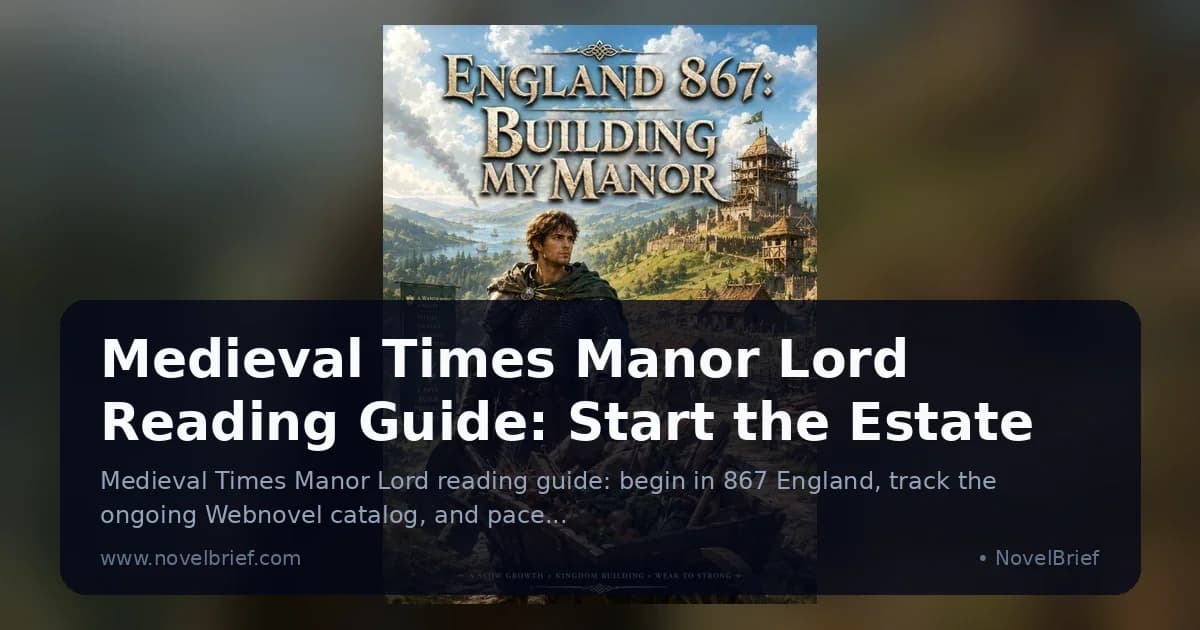
 The sibling review’s real Webnovel cover is reused for the start of this guide.
Step-by-Step
1. Open the official catalog: Use the Webnovel listing and confirm God_Heart’s author credit, the translation notice, the ongoing label, and the latest chapter number. Write down the check date before reading.
2. Start at chapter 1: Begin with “Viking Invasion” rather than a later estate milestone. Adrian’s choice of land, his lack of a fief, and the immediate danger explain why basic work matters. A recap can tell you that a manor exists; it cannot show why the first fence or seed purchase is a decision.
3. Read the survival setup in order: Follow the early chapters through scavenging, heading south, the skirmish, awakening, wounds, and the first trip toward Mercia. Do not skip the small logistics entries. They establish how the serial turns a historical premise into a management problem.
4. Record chapter titles with numbers: Save entries such as “Buying Seeds,” “Assigning Work,” “Pottery Making,” and “Crop Growth” beside their numbers. The title is a durable bookmark if the platform changes its volume layout or displays a different public count.
5. Track one resource chain at a time: Choose food, labor, tools, livestock, or defense and note how one decision creates the next problem. This keeps a long catalog readable without turning every chapter into a spreadsheet.
6. Pause at a work-cycle checkpoint: Stop after a sequence has moved from need to solution to consequence, such as land clearing into crop growth or refugees into food pressure. Ask whether the process feels like story to you. If it does not, a larger chapter count will not fix the mismatch.
7. Resume from the official page: When you return, compare the live count with your note, open the saved chapter title, and continue forward. Never use a scrape-site total as proof that the English edition ended or that an unseen chapter is missing.
8. Keep the ongoing status visible: Do not write “finished” in your reading tracker. Mark the last chapter read, date, title, and platform. This protects you from confusing a temporary pause with an ending.
What the First Chapters Are Teaching You
The Medieval Times Manor Lord reading guide treats the opening as a tutorial in constraints, not as a battle-only prologue. The official chapter list moves from “Viking Invasion” and “Scavenging the Camp” to “Buying Seeds,” “Assigning Work,” “Pottery Making,” “Crop Growth,” and “Animal Husbandry.” That order tells you how to read the novel: Adrian’s territory is built through linked tasks, and a later military choice depends on earlier material decisions.
Pay attention to verbs. A chapter about buying seeds is not merely “filler” if it determines whether a future winter has food. A chapter about assigning work is not a city-builder menu if it changes which people can hunt, farm, guard, or build. The guide’s job is to help you notice those cause-and-effect chains without claiming that every reader will enjoy their pace.
The setting also puts a clock behind the chores. The synopsis places Adrian in 867 England during a Danish invasion. The chapter list later names refugees, winter hunting, salt, transport tools, animal husbandry, wolves, and Vikings. You do not need to memorize an arc chart. Read each new pressure as a test of what the estate has or has not learned to produce.
This is a different pleasure from a cultivation ladder. What is xianxia? explains stories organized around sects, breakthroughs, and spiritual power; Manor Lord is organized around labor and material capacity. What is xuanhuan? is useful when a platform’s genre labels blur historical fantasy with broader Chinese-fantasy categories.
Compare this material progression with . The contrast makes it easier to see why Manor Lord asks you to remember supplies and workers rather than skill screens.
best xianxia novels with system mechanics
Medieval Times Manor Lord Reading Guide: Build Checkpoints
The best checkpoint for this Medieval Times Manor Lord reading guide is a completed chain, not an arbitrary chapter number. “Buying Seeds” becomes meaningful beside “Crop Growth.” “Assigning Work” matters when you can see what the assignments unlock or delay. “Animal Husbandry” matters when food, transport, or winter survival changes afterward. Save a title from the catalog and one sentence about the chain you just watched.
The second checkpoint is a pressure change. When refugees arrive, wolves appear, salt becomes scarce, or Vikings move from distant threat to direct problem, record what the estate can do differently than it could in chapter 1. The question is not whether Adrian wins every encounter. It is whether the settlement’s prior labor changes the options in front of him.
The third checkpoint is a tone check. The official tags include action, adventure, weak-to-strong, historical, and military. The chapter list also contains long runs of making, hunting, transport, and household work. If you came for nonstop raids, decide early whether those quiet chapters feel like preparation or delay. This Medieval Times Manor Lord reading guide cannot remove that tradeoff; it can help you identify it without spoilers.
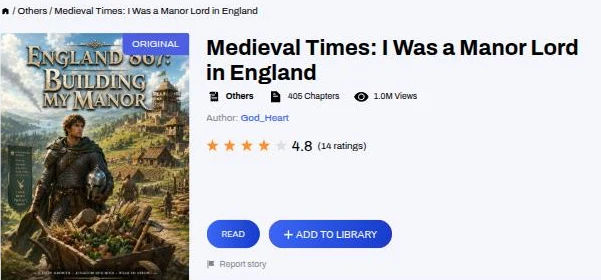 Screenshot of the live Webnovel catalog panel, captured September 25, 2026. Check this page yourself for the current count before you resume.
Tips for an Ongoing Translation
The Medieval Times Manor Lord reading guide recommends a light record-keeping system because translated serial pages are fluid. Keep four fields: chapter number, chapter title, date read, and one material change. Add a fifth field for names only when a new worker, refugee, rival, or settlement becomes important. You do not need a public wiki to follow a story whose central pleasure is accumulation.
Expect modern measurement or phrasing to coexist with the period setting. The sibling review notes that translated language and mixed measurement terms can interrupt the historical texture. Treat that as a reading condition, not as proof that the platform has switched to a different title. If a sentence is unclear, compare the chapter title and nearby context before searching for a machine-translated mirror.
The same rule applies to chapter counts. The earlier review snapshot recorded 305; the official page showed 393 chapters when rechecked on September 24, 2026. That growth is normal for an ongoing serial that updates regularly. Cite the page and the date you checked rather than treating either number as final. Web novel vs. light novel explains why an unofficial copy can use a different split or endpoint.
Use a weekly or arc-sized rhythm rather than chasing the latest number every day. When the serial is ongoing, a pause is part of the reading order. Mark your last chapter, check the official page when you return, and continue from the title you saved. That habit keeps an incomplete story from feeling like a broken one.
If account and payment questions affect where you read, covers ordinary platform checks. This guide’s chapter route assumes the official page remains available, but no ongoing service should be treated as permanent storage.
is Webnovel app safe?
When to Continue, Pause, or Stop
Continue this Medieval Times Manor Lord reading guide route if the estate loop gives small decisions enough weight. A road, mill, store of grain, herd, or defensive wall should change what Adrian can attempt next. The official synopsis and chapter titles make that promise clearly. Whether the execution keeps you interested is a personal call, and the sibling review is the place to read the quality judgment.
Pause after a pressure chain if you feel the work cycle becoming repetition. Save the chapter title and return later. An ongoing story does not reward forced daily reading; it rewards a bookmark that still makes sense when the next batch is available.
Stop if you need a completed historical novel, a fixed final count, or uninterrupted combat. Webnovel labels the title ongoing, and the public count is not stable enough to serve as an endpoint. Stopping is not a failure of the guide. It is the result of using the guide’s decision rule honestly.
Frequently Asked Questions
Where should I start Medieval Times Manor Lord?
Start at chapter 1 on the official Webnovel page. The source review records a 305-chapter snapshot, but the public page can show a different current count. Use chapter titles and dates as your bookmark.
Is the story complete?
No. Webnovel marks it ongoing. There is no final chapter or fixed reading endpoint to plan around.
Who is Adrian?
Adrian is the wandering knight named in the official synopsis. He arrives in England in 867 and chooses to build a territory in uncontrolled mountains and forests.
Does the guide spoil the story?
It names official chapter titles and broad setup facts, but it avoids later plot outcomes. Stop at the checkpoint that matches your own reading position.
Is this only a Viking battle serial?
No. Viking danger is present, but the official synopsis and chapter catalog emphasize farming, hunting, labor, tools, food, refugees, and estate defenses.
Related Reading
- Medieval Times: I Was a Manor Lord in England Review
- What Is Xianxia?
- What Is Xuanhuan?
- Web Novel vs. Light Novel
- Is Webnovel App Safe?
References
Was this guide helpful?
About the author

Danmei & Genre Critic
Danmei and xianxia critic with a background in comparative literature, writing about Chinese web fiction in English since 2019. Toronto-based.
- Writing about danmei and xianxia in English since 2019
- Graduate background in comparative literature
- Tracks the fan-translation-to-official-license pipeline
- Follows Seven Seas' convention announcements directly
Keep reading

Manor Lord Review: 305 Chapters of Building England
Reviews · 9 min

Last Gun Alchemist Reading Guide: Start Without Guesswork
Guides · 13 min
My House of Horrors Reading Guide: Start With Chapter 1
Guides · 11 min
The Monk That Wanted To Renounce Asceticism Reading Guide
Guides · 11 min
Lord of the Mysteries Reading Guide: Start at Chapter 1
Guides · 11 min
Warlock of the Magus World Reading Guide: Start at Rank 1
Guides · 11 min

A Will Eternal Reading Guide: Start Bai Xiaochun's Journey
Guides · 11 min

Reverend Insanity Reading Guide: Start Here, Finish Strong
Guides · 11 min
Disclaimer
This article is published for informational and entertainment purposes. It does not constitute professional financial, legal, or technical advice. Series availability, platform access, translation status, and chapter counts change. Verify critical details (pricing, regional availability, official translation status) with publishers and platforms. Affiliate links, where present, help support our editorial work and are labelled in our affiliate disclosure.
Comments
Loading comments…